
💡 Introduction: Trading Smarter, Not Harder
Ever wonder why your EUR/USD trade tanks right after USD/CHF suddenly spikes? That’s no coincidence those pairs are correlated, and if you’re not aware of it, correlation can either sabotage or supercharge your strategy.
Correlation trading is an advanced tactic that leverages the relationship between different currency pairs to make smarter, more informed trades. In this guide, we’ll break down how to spot these correlations and how to use them to your advantage.
🔄 What is Currency Correlation?
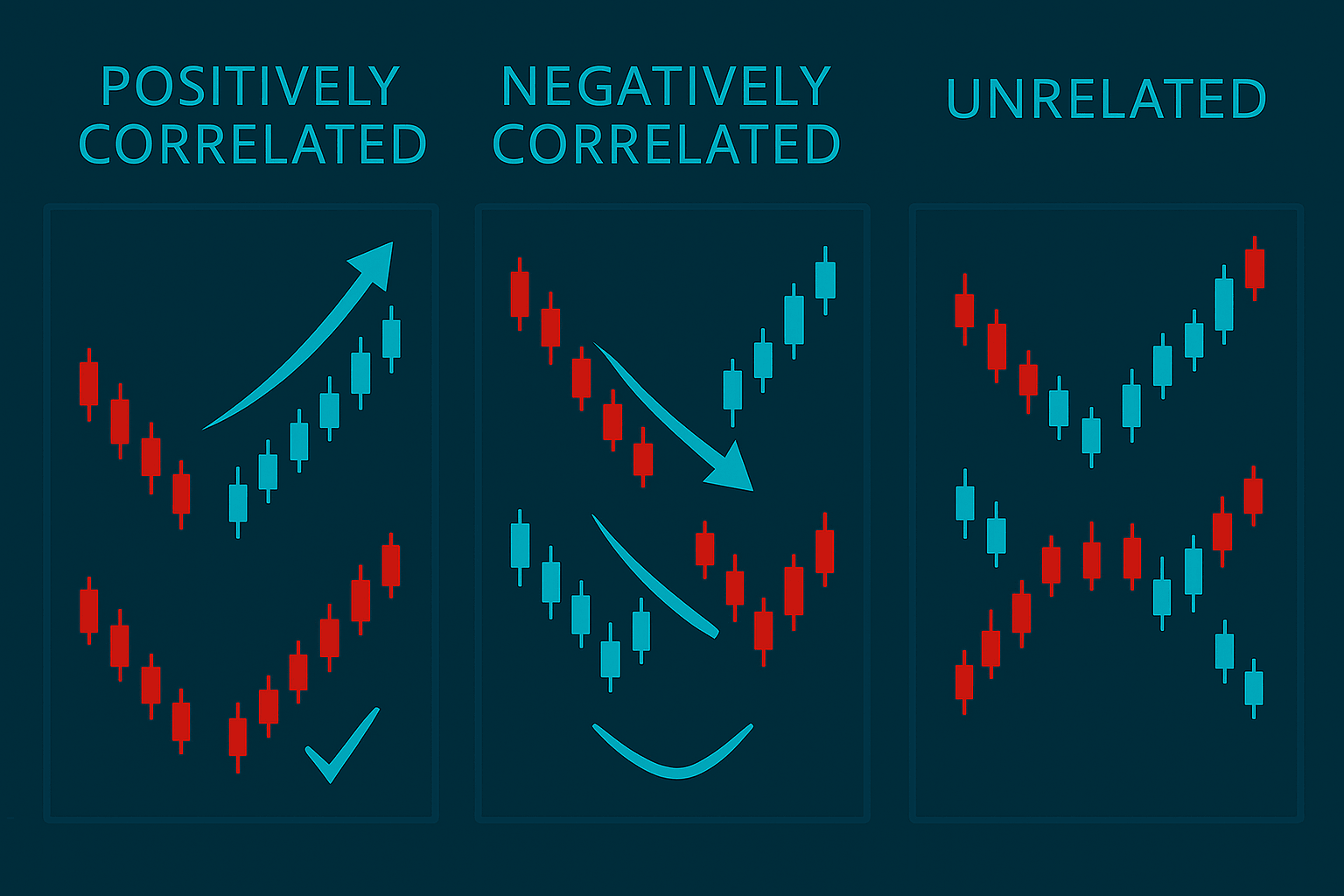
Correlation in forex refers to how closely the price movements of two currency pairs mirror each other. It ranges from:
- Positive correlation – both pairs move in the same direction (e.g., EUR/USD and GBP/USD).
- Negative correlation – one goes up while the other goes down (e.g., EUR/USD and USD/CHF).
- Zero correlation – no consistent relationship in movement.
Understanding these dynamics helps avoid double exposure or taking trades that cancel each other out.
🧠 Why Correlation Matters in Advanced Strategies
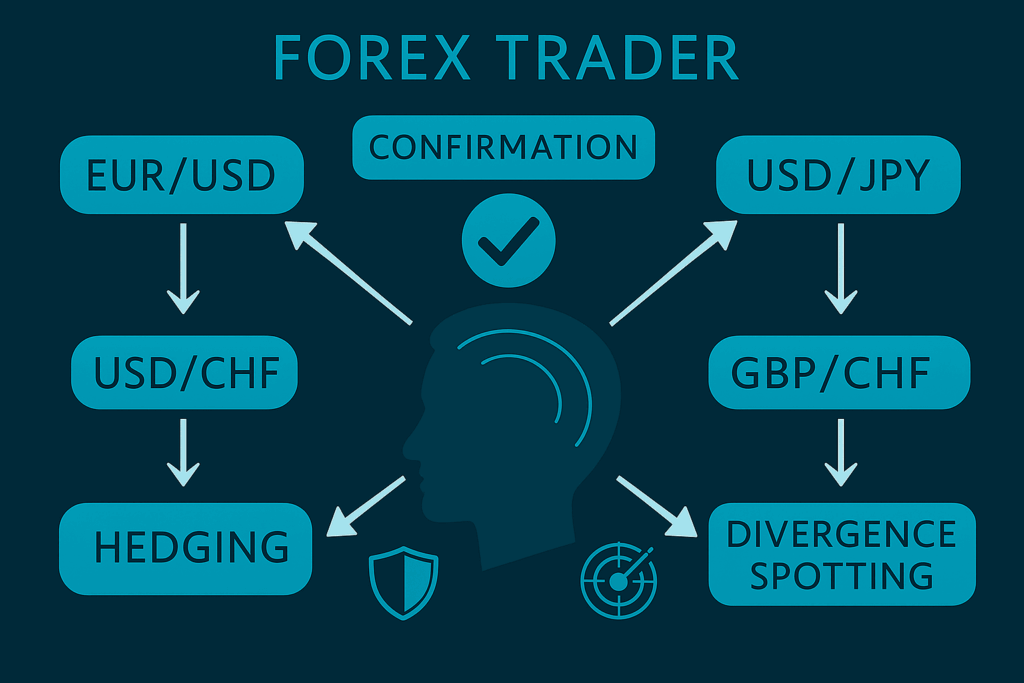
For advanced traders, correlation is more than just trivia it’s a tactical edge. Knowing how different pairs interact allows you to:
- Confirm trade setups using correlated pairs as added confluence.
- Avoid conflicting positions that could neutralize your gains.
- Hedge trades strategically to reduce risk.
- Spot hidden opportunities when correlations temporarily break (and correct later).
🎯 Real-World Example: Correlation in Action
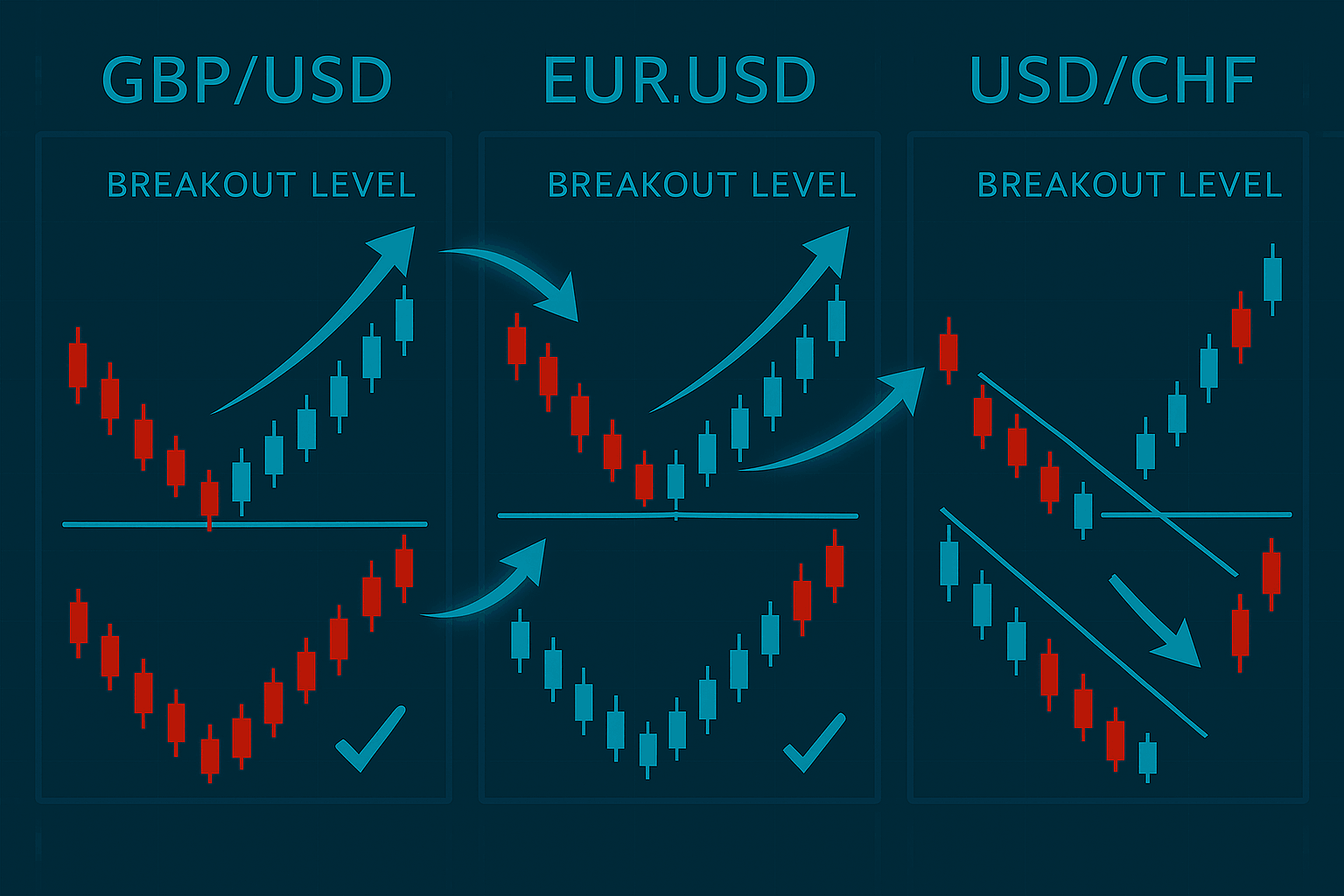
Imagine you’re eyeing a long trade on GBP/USD. You check the charts and notice EUR/USD is also breaking out in the same direction this strengthens your conviction. At the same time, you notice USD/CHF is dropping another sign that USD weakness is in play.
This three-pair alignment confirms the bias. Now, instead of trading blind, you’re moving with market structure and inter-pair flow.
🔥 Advanced Tactics with Correlation
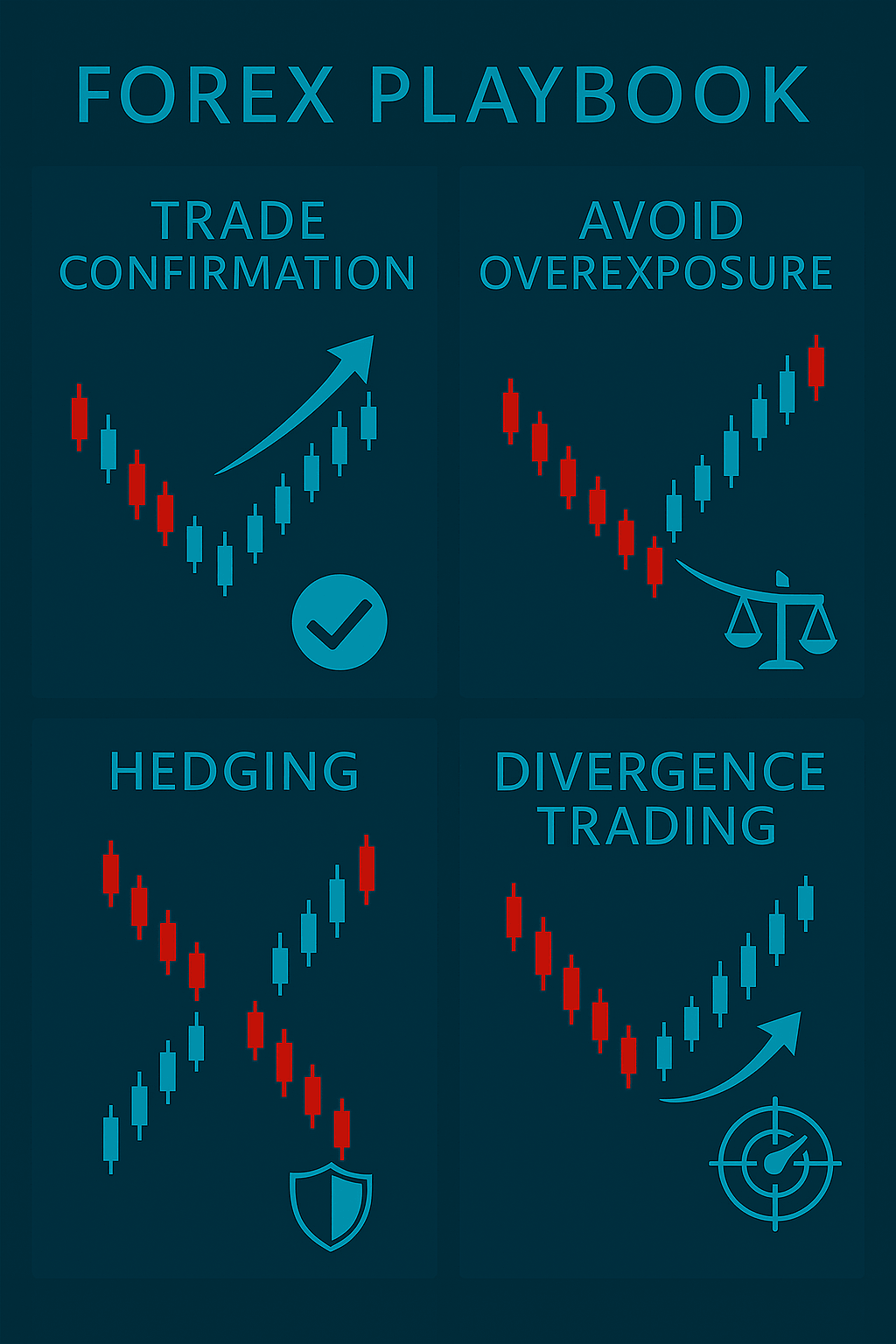
- Trade Confirmations Using Related Pairs
If you see a bullish setup on AUD/USD, check if NZD/USD (closely correlated) is showing similar strength. If both align, your setup is stronger – a technique supported in professional analysis.. - Avoiding Overexposure
Long on EUR/USD and GBP/USD at the same time? You’re basically doubling your USD short exposure. If they both reverse, you’re hit twice. Limit stacking positions on positively correlated pairs unless it’s part of a planned basket. - Hedging via Inverse Correlation
If you’re long on EUR/USD but unsure about volatility, a short position on USD/CHF might hedge the risk. If the USD strengthens, one trade offsets the other. - Exploiting Divergences
Sometimes, correlated pairs temporarily diverge. If EUR/USD is dropping but GBP/USD holds strong, it might be a sign of upcoming alignment. Entering at the divergence point can offer strong reward/risk setups – similar to what we teach in our advanced entry precision guides..
🛠 How to Monitor Correlations Without Overwhelm
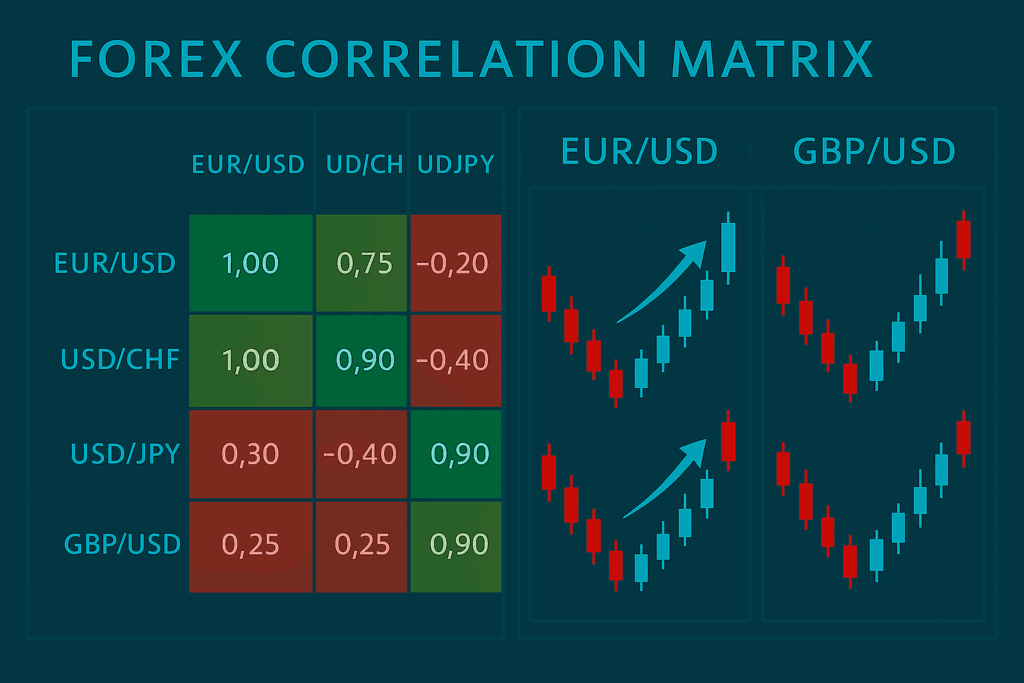
- Use a correlation indicator or online correlation matrix updated in real-time.
- Focus on major pairs first before branching into minors and crosses.
- Re-check correlations monthly, as relationships shift due to changing fundamentals or market sentiment.
- Track pair movements on side-by-side charts to visually see alignment or divergence.
⚠️ Mistakes to Avoid
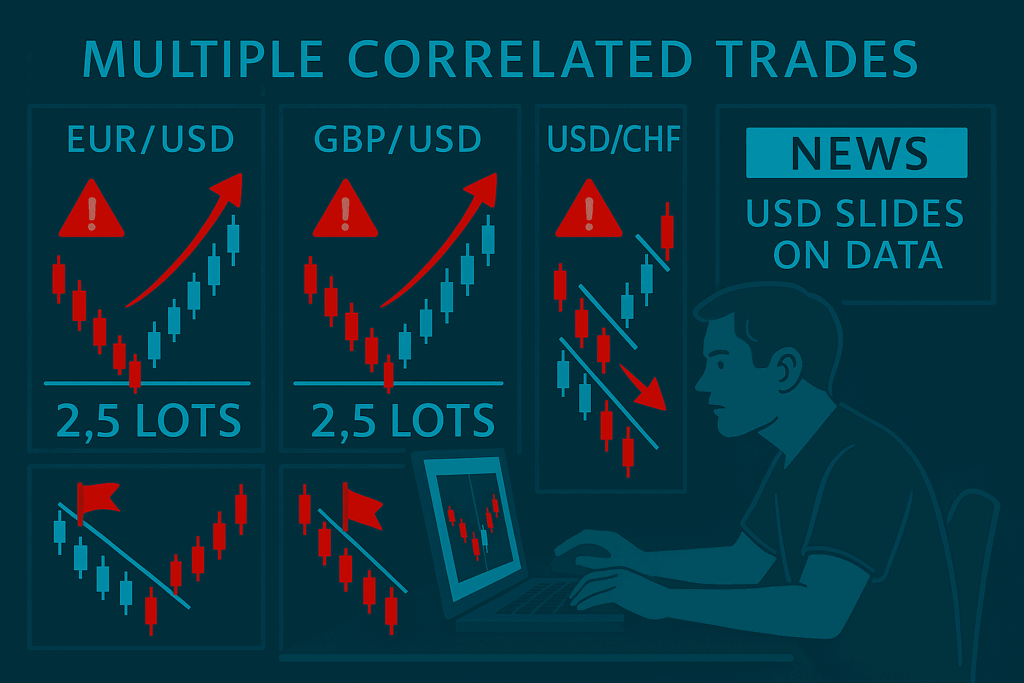
- Blindly assuming correlations are always strong relationships fluctuate over time.
- Over-leveraging across correlated trades. It may look like diversification but isn’t.
- Ignoring fundamental drivers. Correlation doesn’t override news impact (like NFP or central bank events).
🧭 Final Thoughts
Correlation trading isn’t about being fancy it’s about being informed. When you understand how currencies interact, you gain a market-wide view instead of being tunnel-visioned on one pair. Whether you’re confirming trades, hedging risk, or spotting early momentum shifts, correlation adds strategic depth to your trading decisions.
Whether you’re confirming trades, hedging risk, or spotting early momentum shifts, correlation adds strategic depth to your trading decisions.