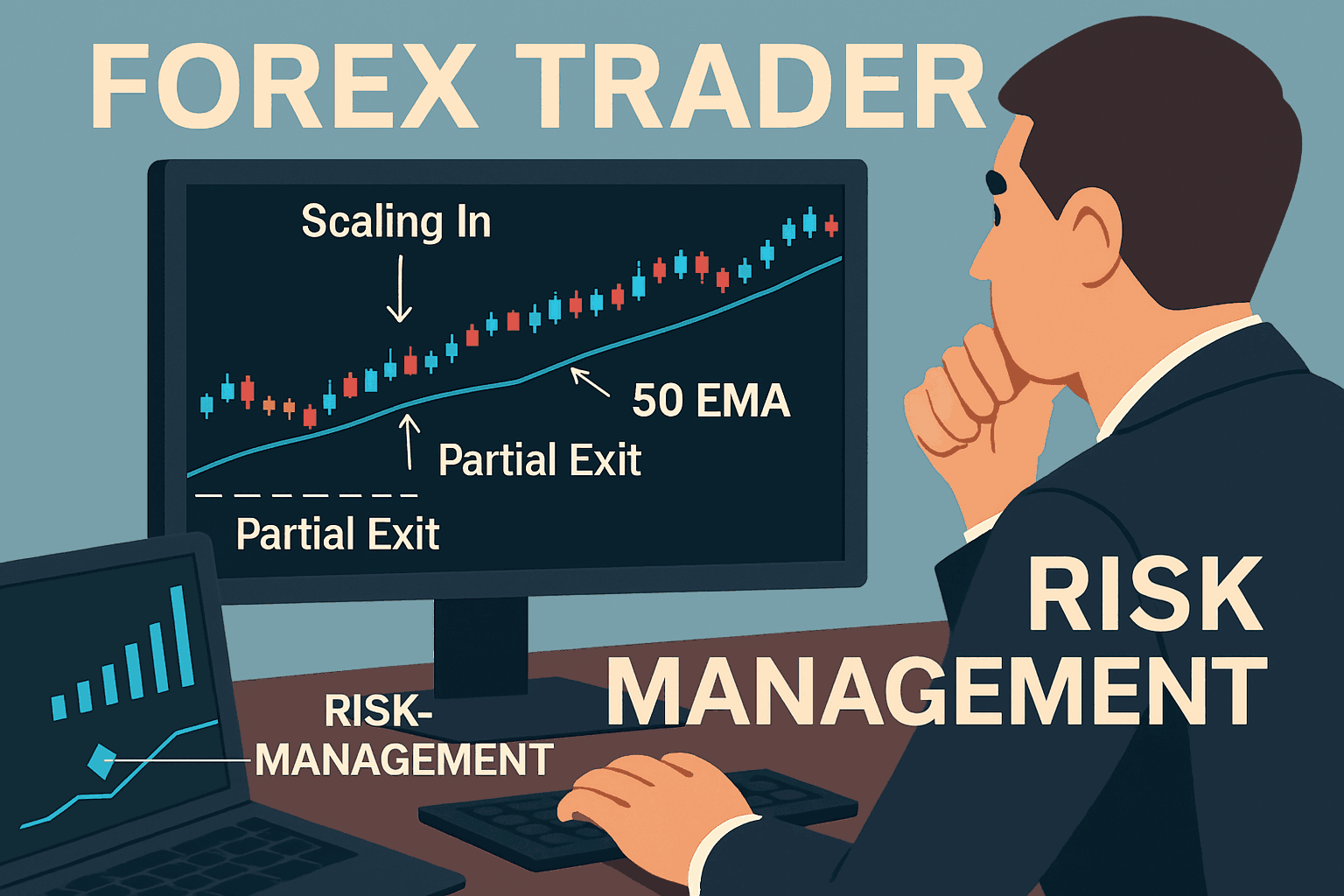
Introduction: Risk Management Isn’t Just About Stop Losses
If you think risk management is only about setting stop losses, you’re missing half the equation. True professionals manage risk dynamically adjusting trade size, scaling entries, and locking in profit strategically.
One of the most powerful risk tools used by pros is scaling in and out of positions. Done right, it allows you to maximize profits in strong trends while minimizing exposure during uncertainty. This article breaks down how to implement this advanced tactic without overcomplicating your strategy.
🔄 What Does “Scaling In & Out” Mean?
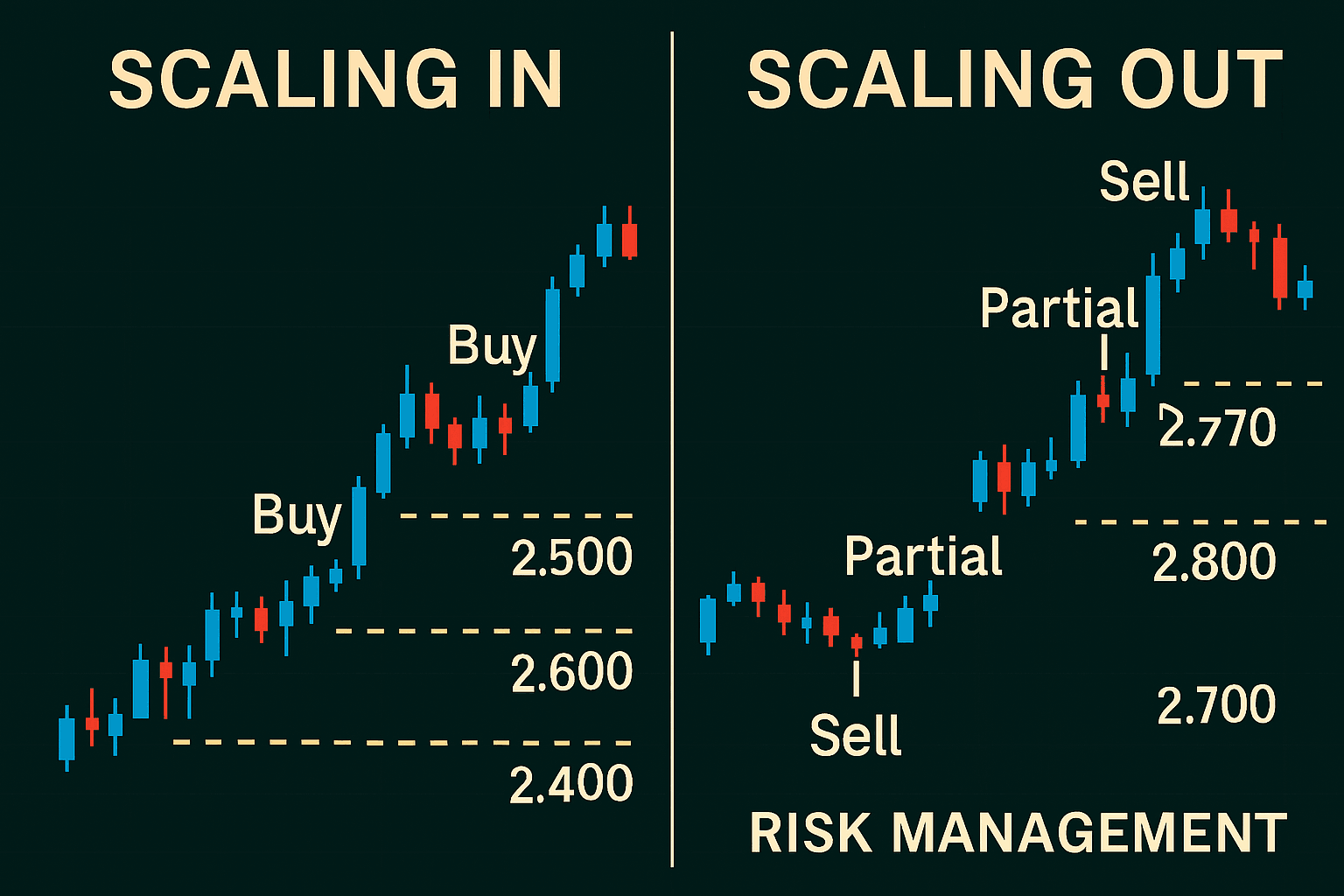
- Scaling In: Entering a trade in multiple parts, rather than one full position at once.
- Scaling Out: Exiting a trade gradually, locking in profit at different price points.
This approach gives you greater flexibility and can improve your risk-to-reward ratio over time especially in volatile or trending markets.
🎯 Why Pros Use Scaling Instead of All-In or All-Out
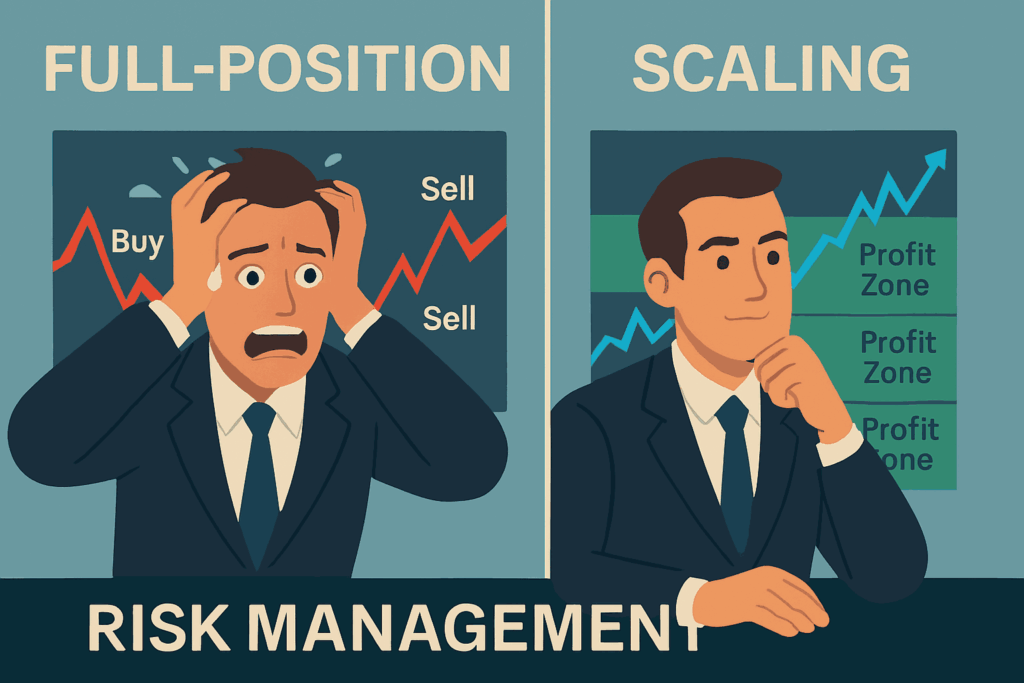
- Reduces entry pressure: No need to catch the exact top or bottom.
- Improves reward potential: Hold partial positions to ride longer trends.
- Better emotional control: Locking partial profits keeps you calm during retracements.
- More precise risk adjustment: You can reduce size if the market starts acting against you.
🔍 Scaling In: How to Do It Right
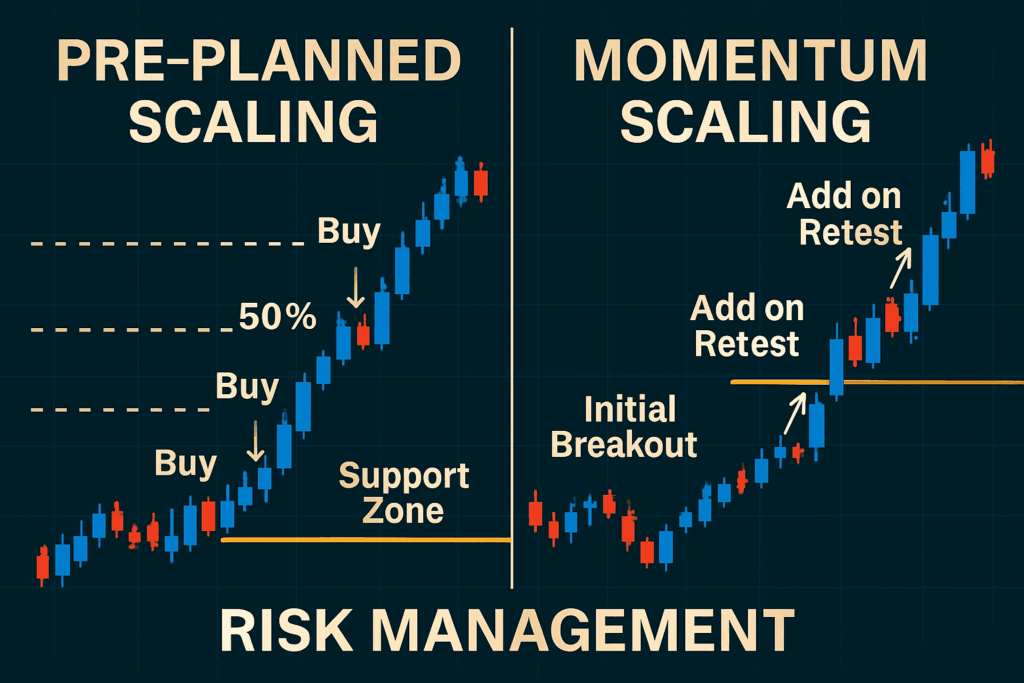
There are two types of scaling in:
- Pre-planned Scaling In
You intentionally divide your position and enter at technical levels like:- Key Fib levels (e.g., 50%, 61.8%, 78.6%)
- Support/resistance zones
- Trendline retests
This approach is great for trades where you expect a pullback before continuation.
- Momentum-Based Scaling In
Start small, and as the market confirms your direction, you add size. For example:- Initial entry on breakout
- Add on retest
- Add again after a higher low or breakout continuation
This works well in strong trending markets.
Pro Tip: Always know your total maximum risk before scaling in. Don’t overexpose just because you’re entering in pieces.
💸 Scaling Out: Locking Profit Without Killing Potential
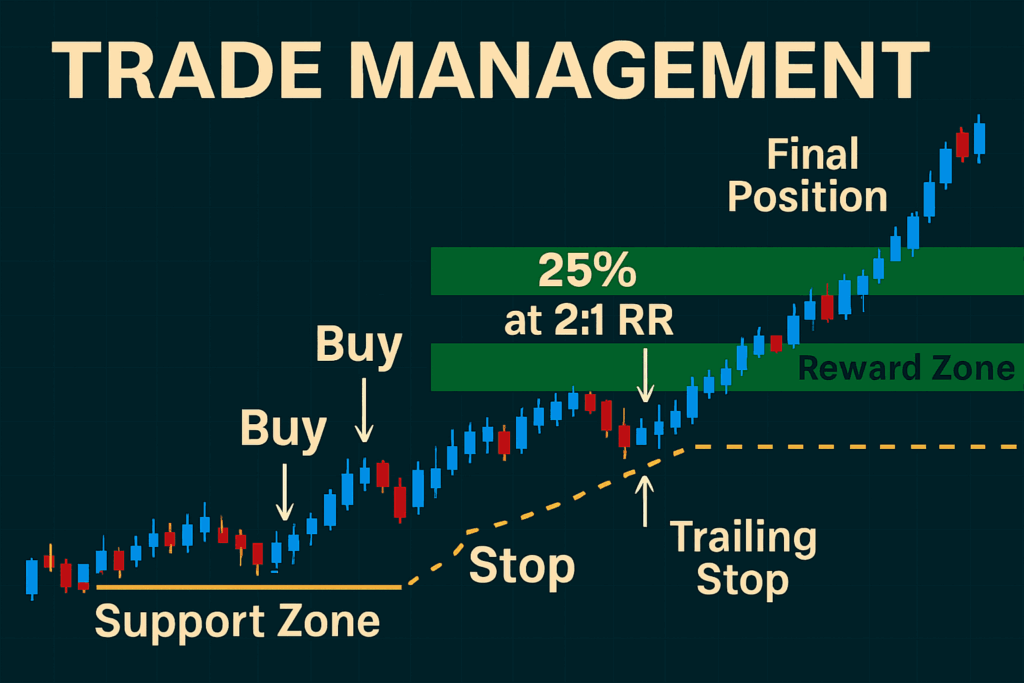
Rather than closing the entire trade at once, scale out gradually to:
- Secure profits at predetermined levels (e.g., previous highs/lows)
- Leave runners for trend continuation using trailing stops
- Manage emotions by banking profit early while keeping upside open
Example approach:
- Take off 50% at 1:1 RR
- Close another 25% at 2:1 RR
- Let the rest run with a trailing stop or until a major reversal signal
This balances profit-taking discipline with open-ended reward.
📘 Trade Example: GBP/USD Short With Scaling
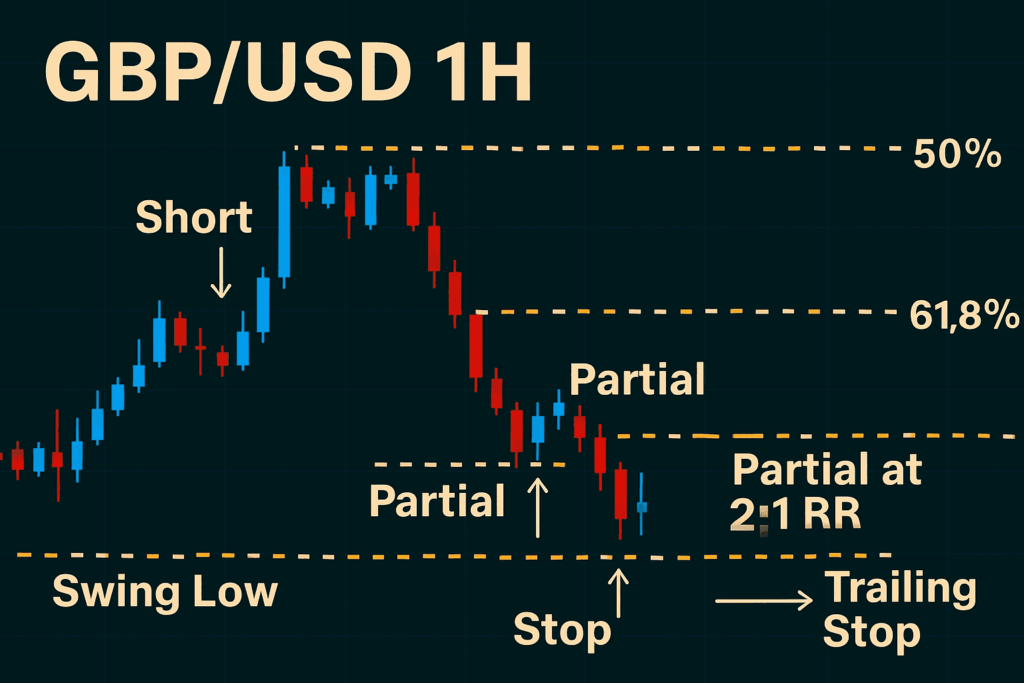
Let’s say GBP/USD is showing bearish structure on the 1H chart.
- You enter your first short position at the 50% Fibonacci retracement.
- Price rallies to a resistance zone aligning with 61.8% you scale in again.
- Price begins dropping:
- You take partial profit at the last swing low.
- You close more at 2:1 RR.
- You let the final 25% run with a trailing stop behind lower highs.
Result: You secure profits at each leg and still benefit if the trend extends.
⚠️ Scaling Mistakes to Avoid
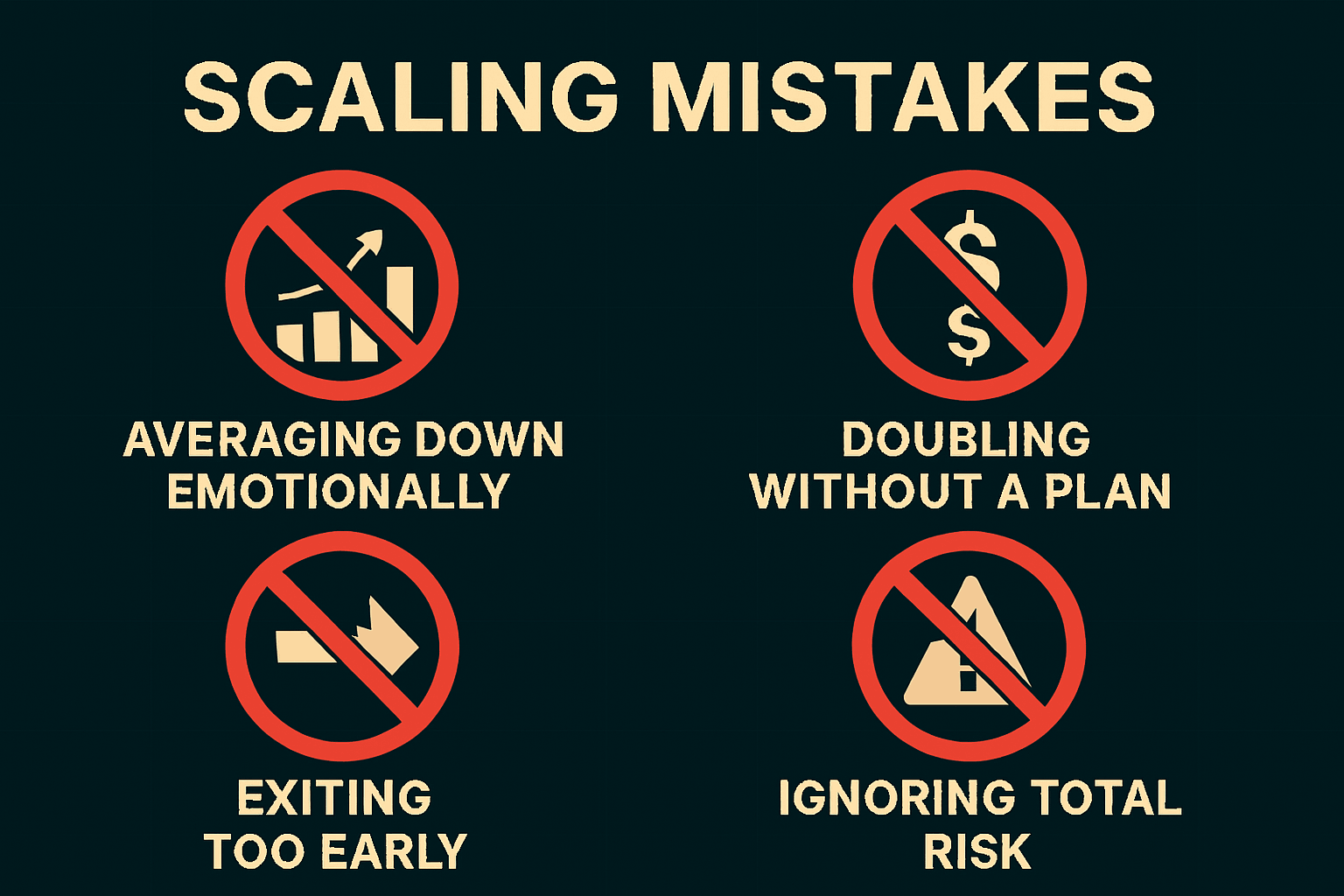
- Adding to losing trades emotionally (don’t “average down” without structure!)
- Doubling down without a plan this turns scaling into gambling
- Exiting too early on strong trends trust your setup
- Not tracking net risk keep your total risk per trade consistent (e.g., 1–2%)
🧭 Final Thoughts

Scaling in and out isn’t about being fancy it’s about trading with flexibility, discipline, and precision. When you approach the market with a plan to adapt your size intelligently, you reduce stress and enhance your ability to capture bigger wins.
Master this and you’ll start trading like a pro not just in theory, but in execution.