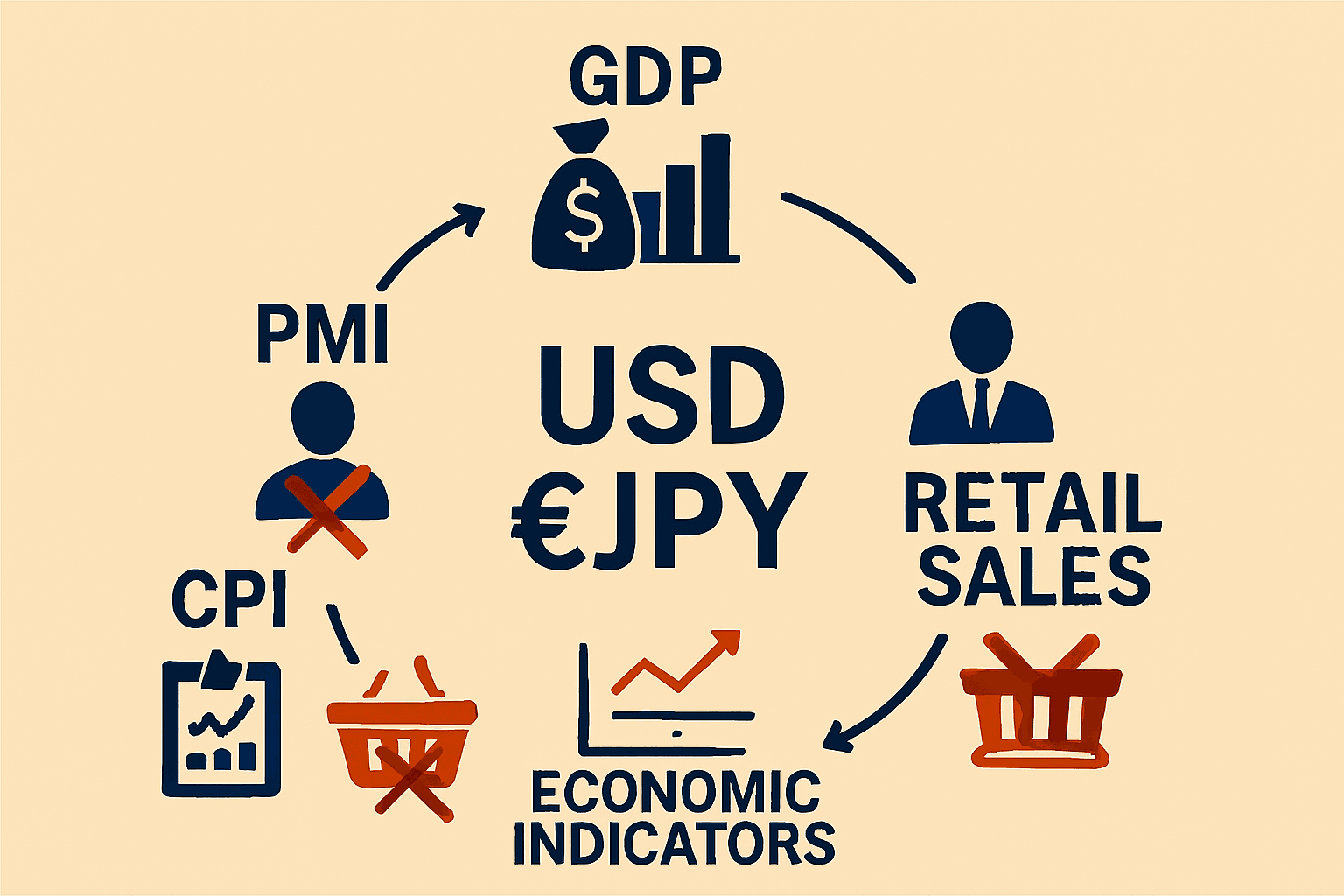
🧠 Introduction: Numbers That Move the Market
You’ve probably seen economic data releases cause massive forex spikes sometimes in seconds. But understanding the role of economic indicators in fundamental forecasting is what separates reactive traders from strategic ones. Which indicators matter most and how can you use them to predict price before the market moves?
That’s where economic indicators come in. These reports give you insight into the direction of an economy and when used correctly, they become a forecasting tool that helps you stay steps ahead of the crowd.
In this article, we’ll break down the key indicators that drive currencies and how to use them to create a reliable fundamental bias in your trading.
📊 What Are Economic Indicators?
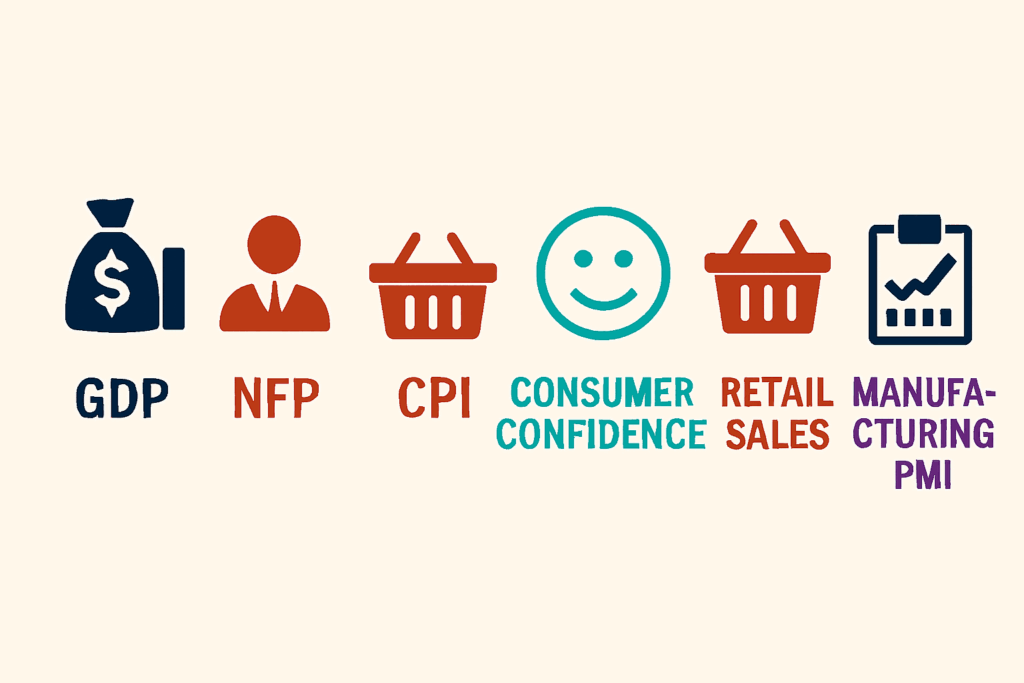
Economic indicators are data reports released by governments and institutions that reflect a country’s financial health. They’re usually scheduled and include metrics on:
- Growth (e.g., GDP)
- Employment (e.g., NFP, jobless claims)
- Inflation (e.g., CPI, PCE)
- Spending (e.g., Retail Sales, Consumer Confidence)
- Production (e.g., Manufacturing PMI, Industrial Output)
Each indicator can influence central bank decisions, affect investor sentiment, and ultimately, impact currency strength.
🧩 Leading vs. Lagging Indicators
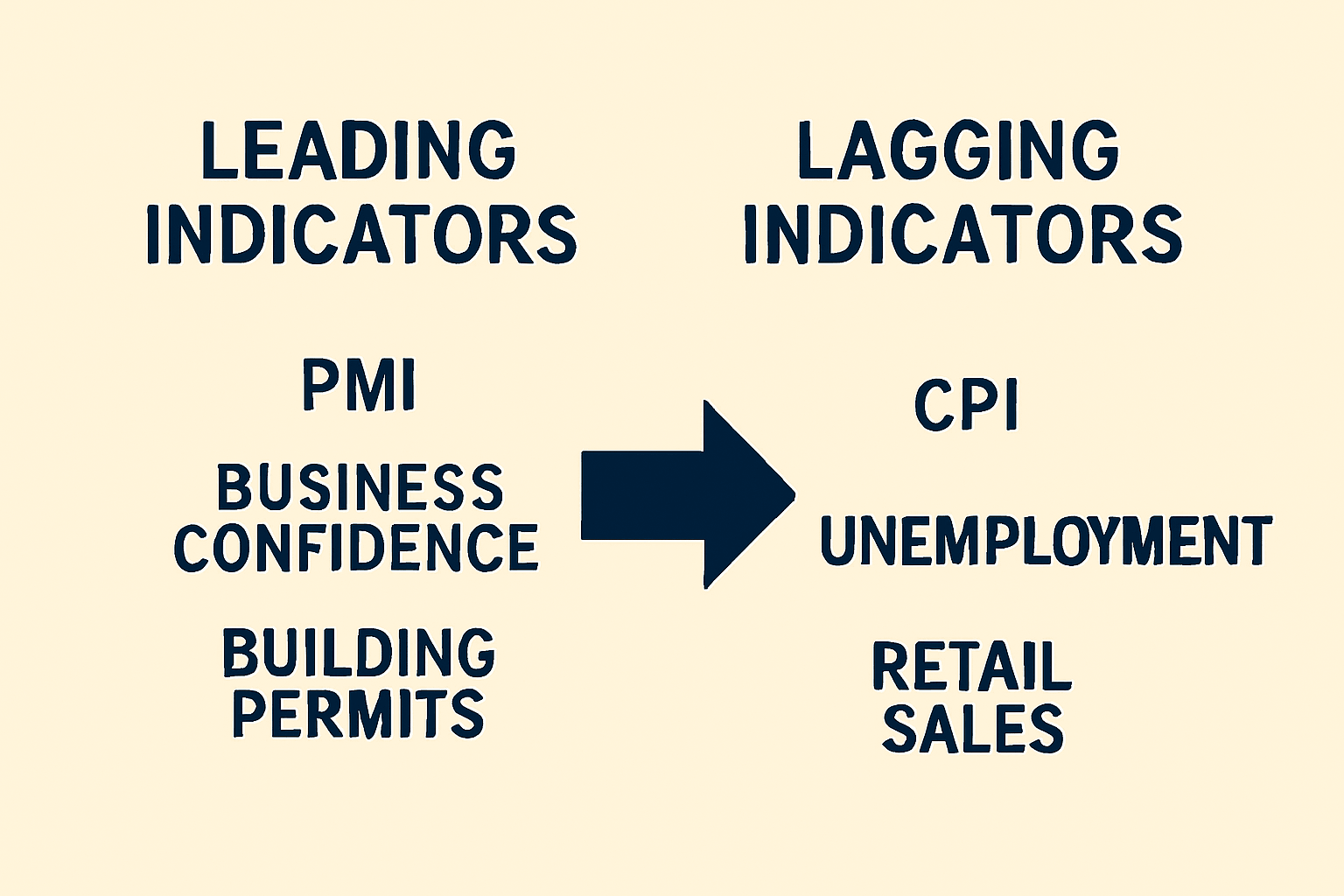
- Leading Indicators:
Predict future movements (e.g., Building Permits, PMI, Business Confidence) - Lagging Indicators:
Confirm trends already underway (e.g., Unemployment Rate, CPI)
Smart traders use a blend of both to anticipate where an economy is heading and position themselves before monetary policy adjusts.
🏦 Why Central Banks React to These Numbers
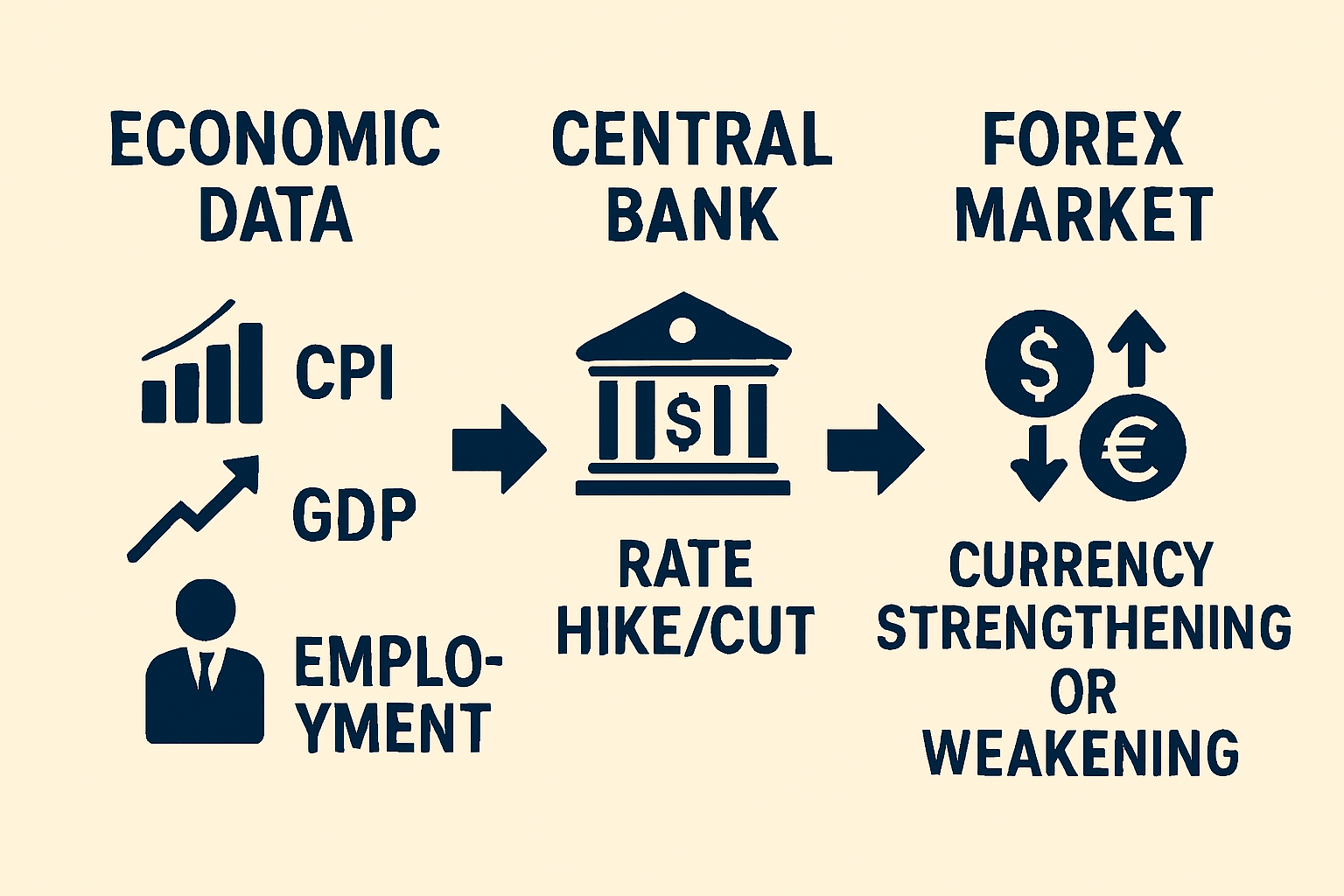
Central banks (like the Fed or ECB) monitor these indicators to decide whether to:
- Hike or cut interest rates
- Adjust inflation targets
- Stimulate or cool the economy
For forex traders, this means:
- Better-than-expected data = likely tightening = stronger currency
- Worse-than-expected data = possible easing = weaker currency
Trading becomes less about charts and more about economic trajectory.
🔍 Key Economic Indicators to Watch (and Why)
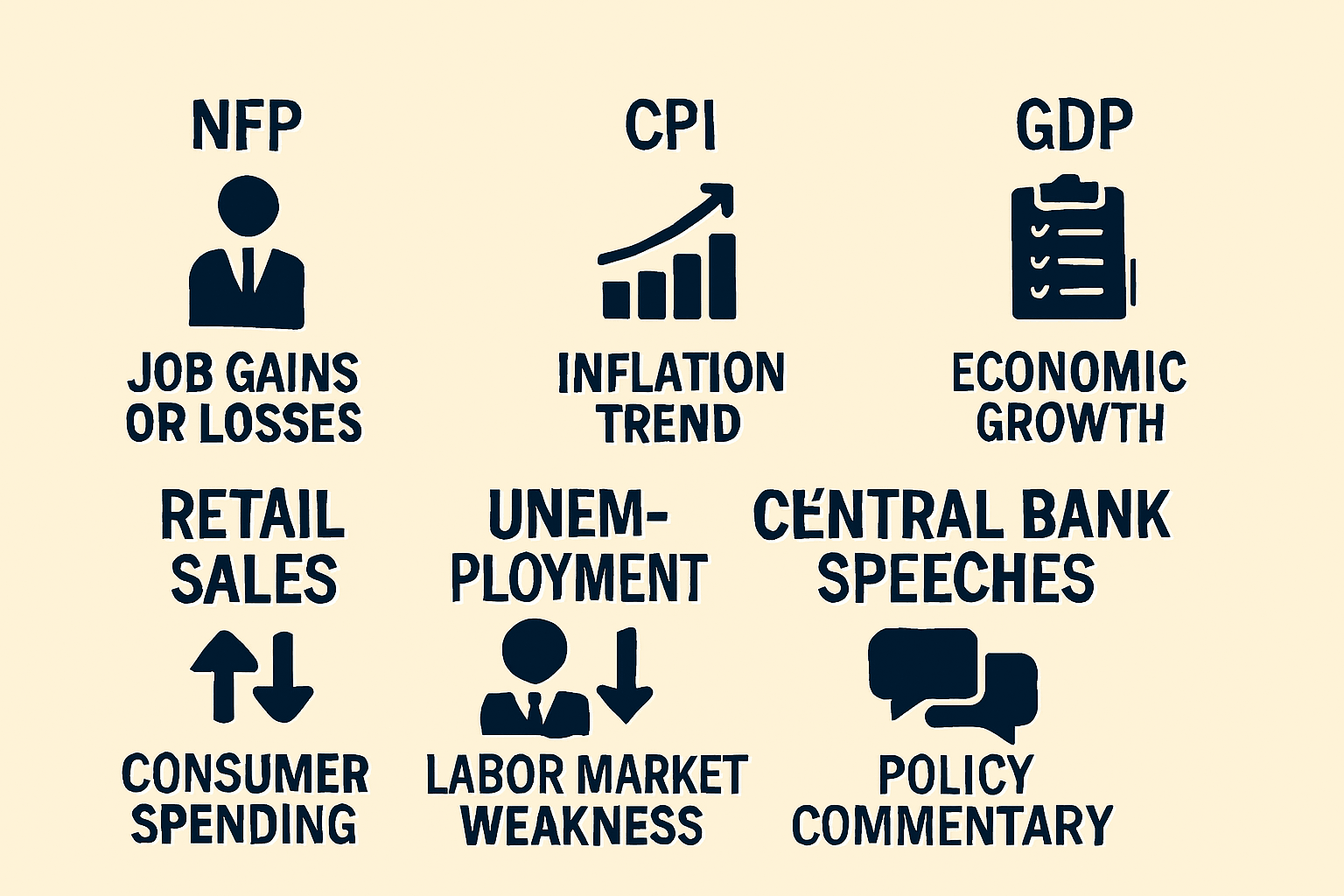
- Non-Farm Payrolls (NFP) – USA
Measures job creation. Higher NFP = stronger USD (usually). - Consumer Price Index (CPI)
Core inflation measure. Hot CPI = rate hikes likely = bullish for currency. - Gross Domestic Product (GDP)
Big-picture growth indicator. Positive GDP = economic strength = currency support. - Purchasing Managers’ Index (PMI)
Leading indicator of business conditions. Above 50 = expansion. - Retail Sales
Tracks consumer spending. Strong sales = economic optimism. - Unemployment Rate
Shows labor market health. Low unemployment = policy tightening. - Central Bank Speeches & Minutes
Forward guidance and tone (hawkish/dovish) have immediate impact on currencies.
📘 Real-World Example: Trading the Data in Context
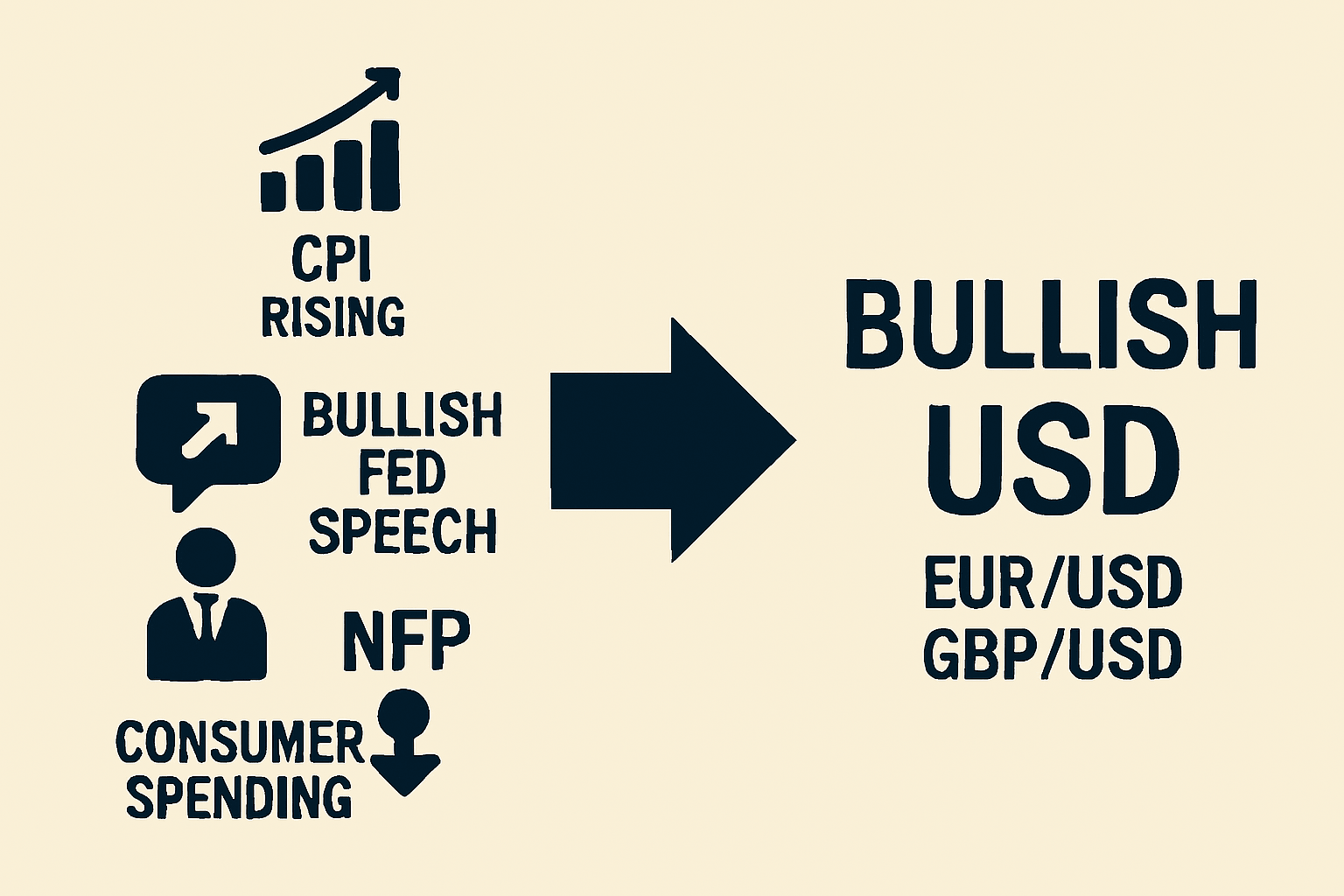
Let’s say:
- U.S. CPI is rising for 3 straight months
- Fed Chair gives a hawkish tone in a speech
- NFP beats forecast
Together, these point to an aggressive stance by the Fed.
→ A trader could build a bullish USD bias, looking to short pairs like EUR/USD or GBP/USD on pullbacks even before the next rate hike is announced.
That’s forecasting with fundamentals not reacting late.
🎯 How to Use Indicators in Your Strategy
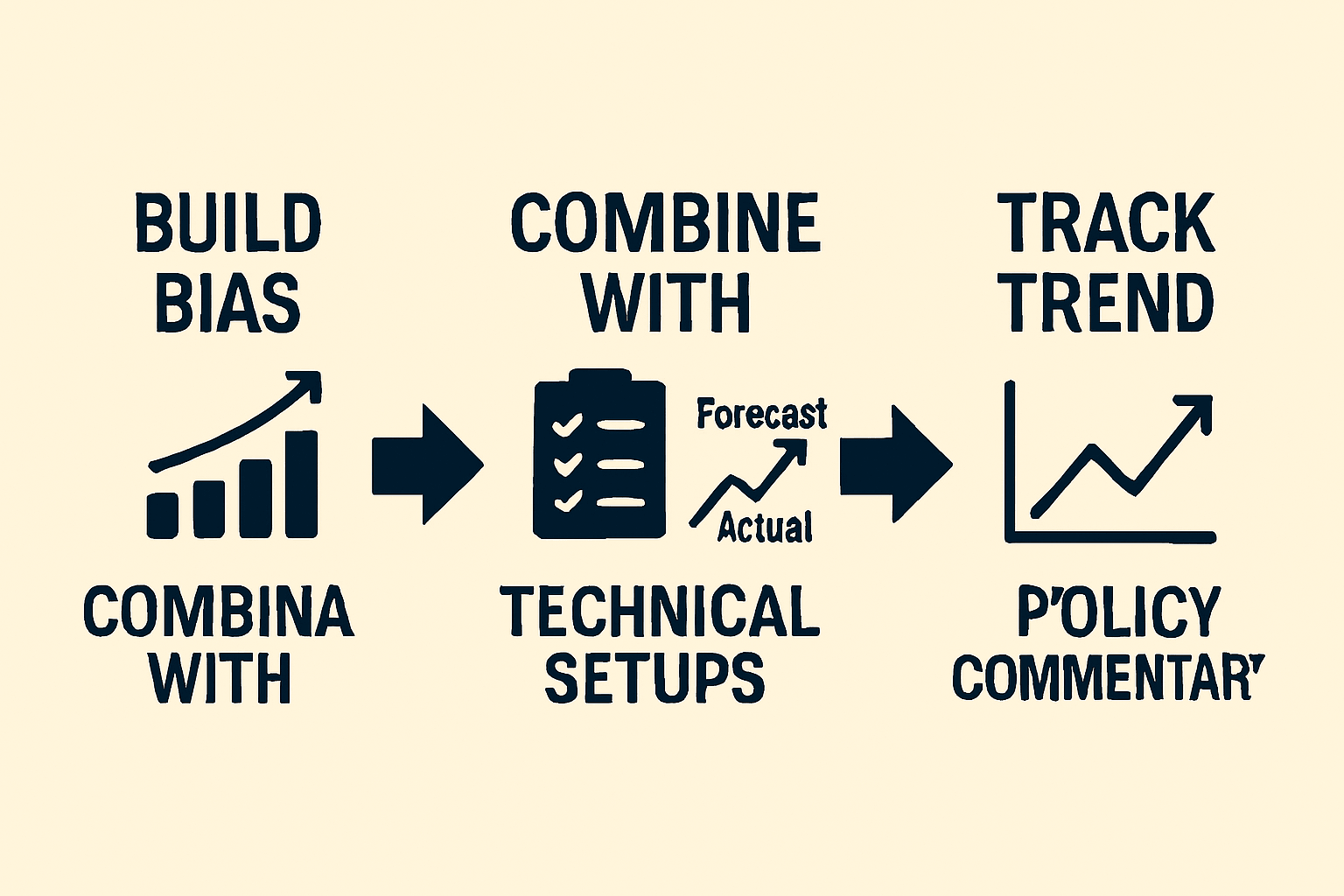
- Build a directional bias weekly.
Track the top data points to understand which currencies are gaining strength. - Use indicators as confluence.
Combine technical setups with fundamental context (e.g., don’t short USD when data is strong and Fed is hawkish). - Watch expectations vs. reality.
Market often moves on the surprise. A “miss” can reverse a trend even if the number is still strong. - Track the trend, not just the print.
One bad report isn’t a reversal but a consistent shift over several releases is a major signal.
⚠️ Mistakes to Avoid
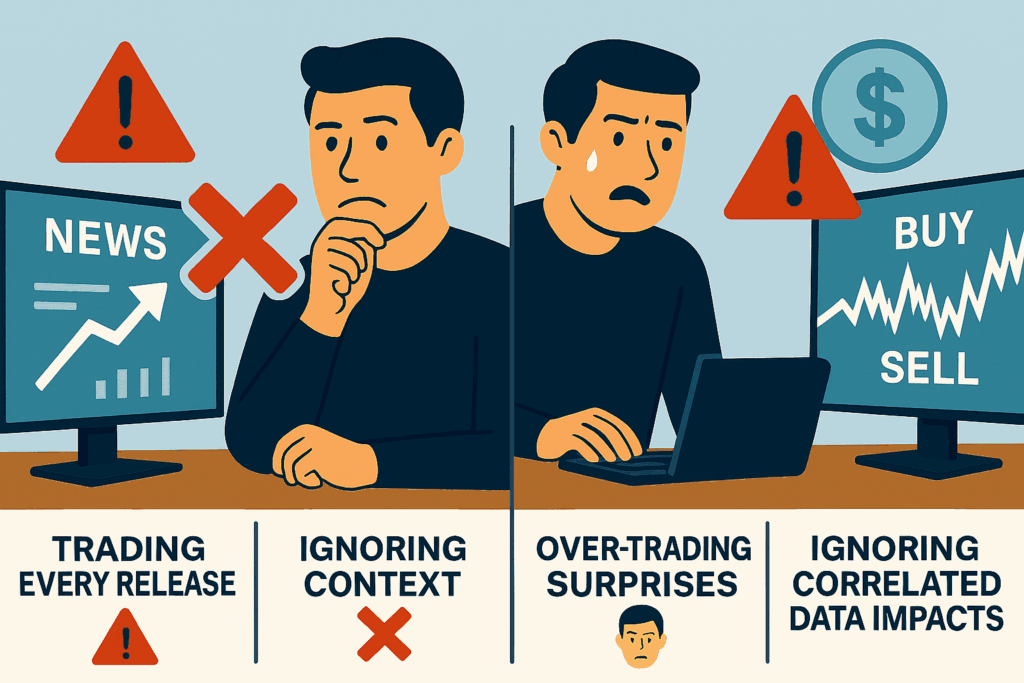
- Trading every release without a broader plan
- Ignoring the bigger economic story (context > number)
- Overtrading surprise prints without confirmation
- Forgetting how correlated data impacts across currencies (e.g., U.S. inflation affects gold, oil, and CAD pairs)
🧭 Final Thoughts

If you want to trade like a professional, you need to think like one. Economic indicators aren’t just noise they’re the pulse of the market.
Used properly, they help you:
- Build conviction
- Time trades with purpose
- Stay aligned with central bank trajectories
- Filter out low-quality setups
With this understanding, you stop chasing price and start forecasting where it’s going next.