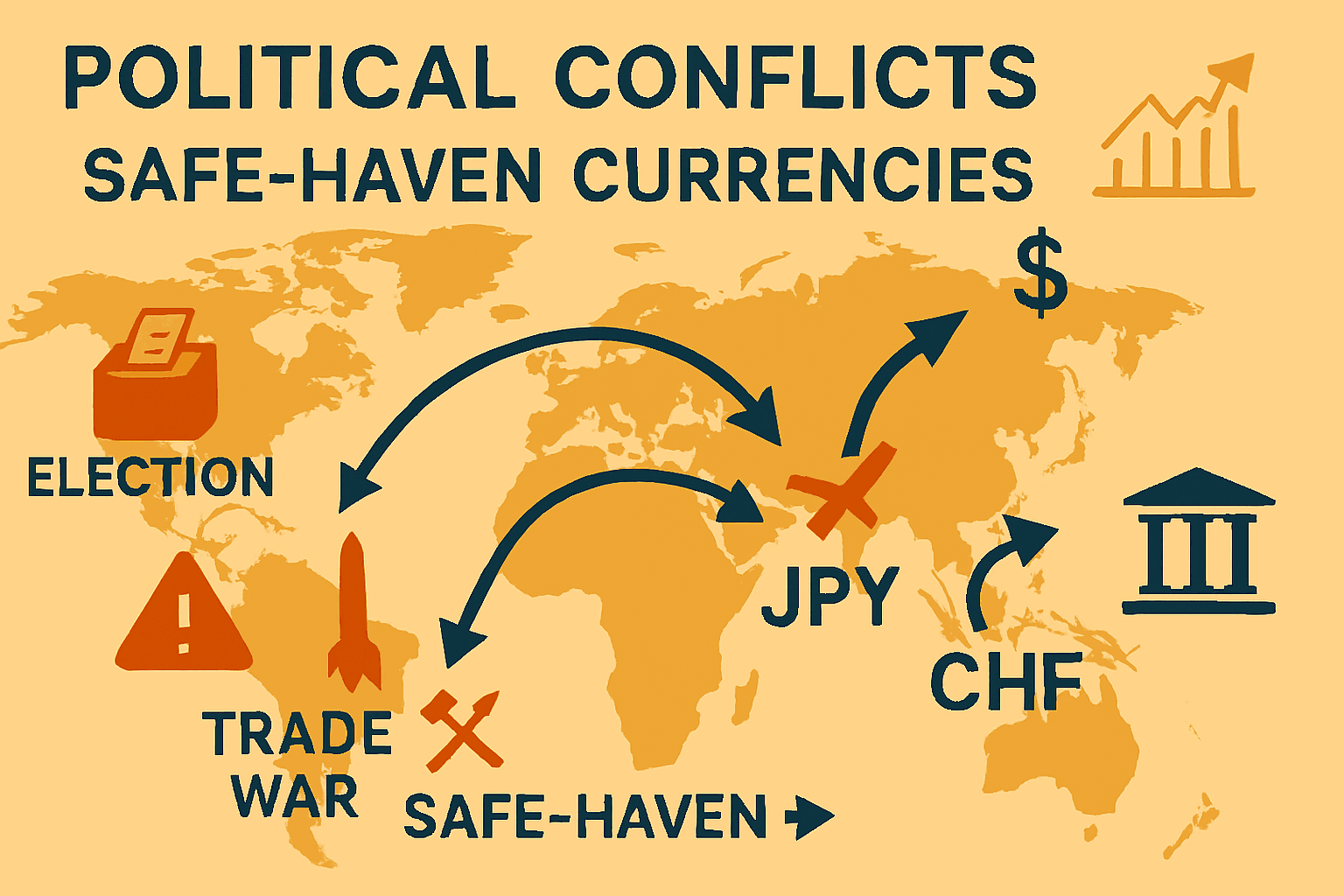
🧠 Introduction: When Politics Shake the Markets
Charts can’t always predict the effects of global geopolitical events and their currency impacts. That’s the domain of geopolitics where headlines move money, and uncertainty becomes volatility.
Geopolitical events don’t follow economic logic. They move markets through fear, speculation, and power shifts. For forex traders, this means big risks but also big opportunities if you understand how different events impact currency values.
This article breaks down how global political events influence forex markets, which currencies are most sensitive, and how to trade geopolitical volatility without panic.
🌍 What Counts as a Geopolitical Event?
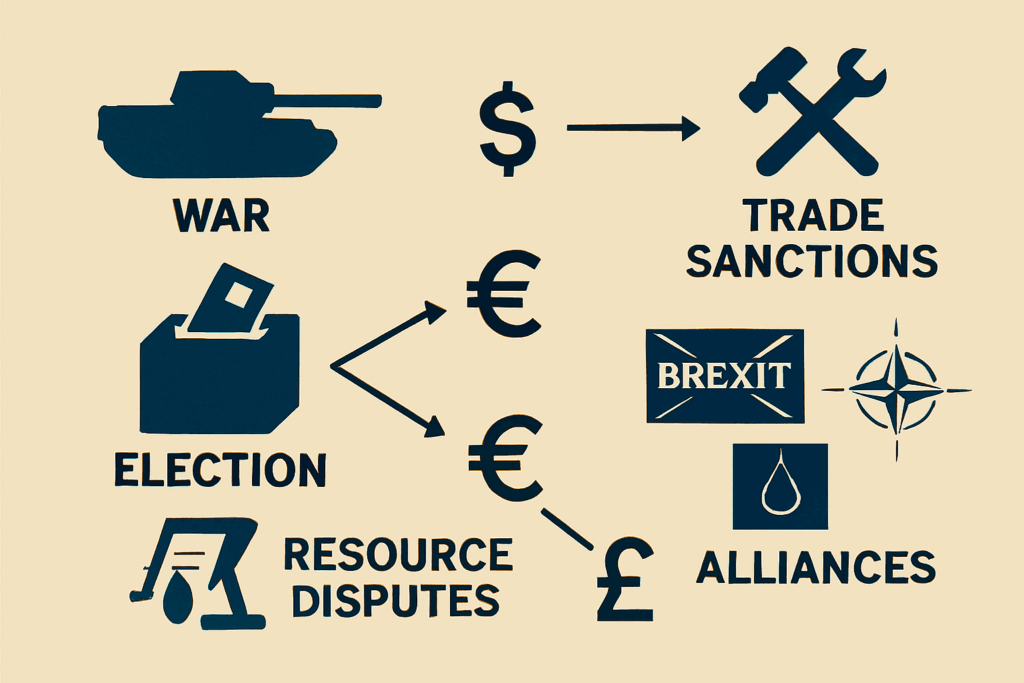
Geopolitical events are non-economic disruptions that influence global confidence, trade, and money flow. Examples include:
- Wars and military conflicts
- Elections and regime changes
- Trade wars and sanctions
- Terrorist attacks
- Alliances breaking or forming (e.g., Brexit, NATO shifts)
- Resource-related disputes (oil, gas, rare earths)
Each of these can cause flight to safety, capital flight, or currency manipulation depending on who’s involved.
💣 Safe-Haven vs. Risk Currencies
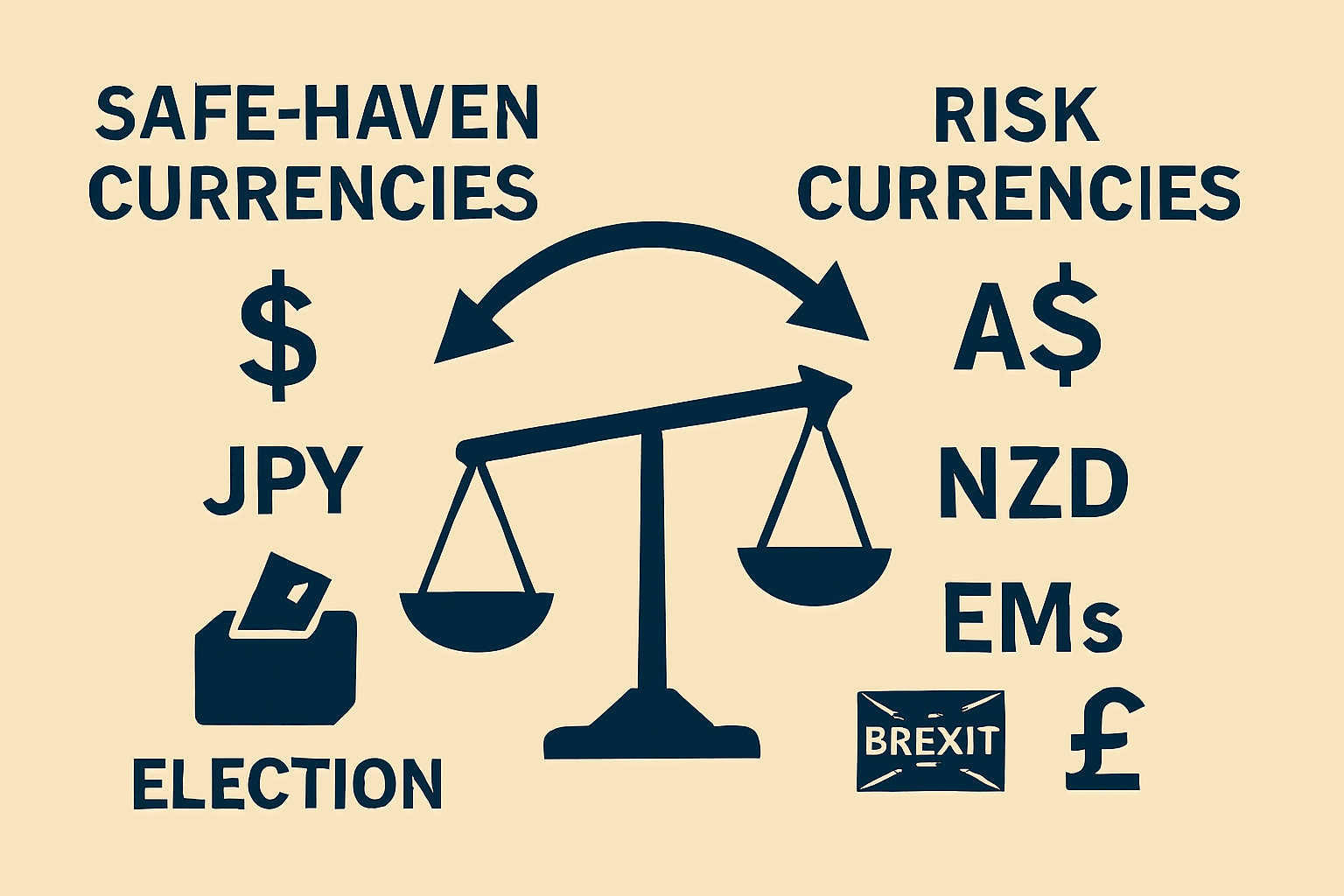
During geopolitical shocks, investors rush to safety usually out of high-risk assets and into safe-haven currencies.
Safe-haven currencies:
- USD (U.S. Dollar) – global reserve currency, strongest risk-off asset
- CHF (Swiss Franc) – historically stable, politically neutral
- JPY (Japanese Yen) – often rises in times of global crisis
- Gold (XAU) – not a currency, but trades similarly in crisis
Risk currencies:
- AUD, NZD – commodity and trade-exposed economies
- EM currencies – like TRY, ZAR, MXN; vulnerable to capital outflow
- EUR, GBP – sensitive to European political risk (Brexit, energy, NATO)
🧭 Real-World Examples: When Geopolitics Took Over
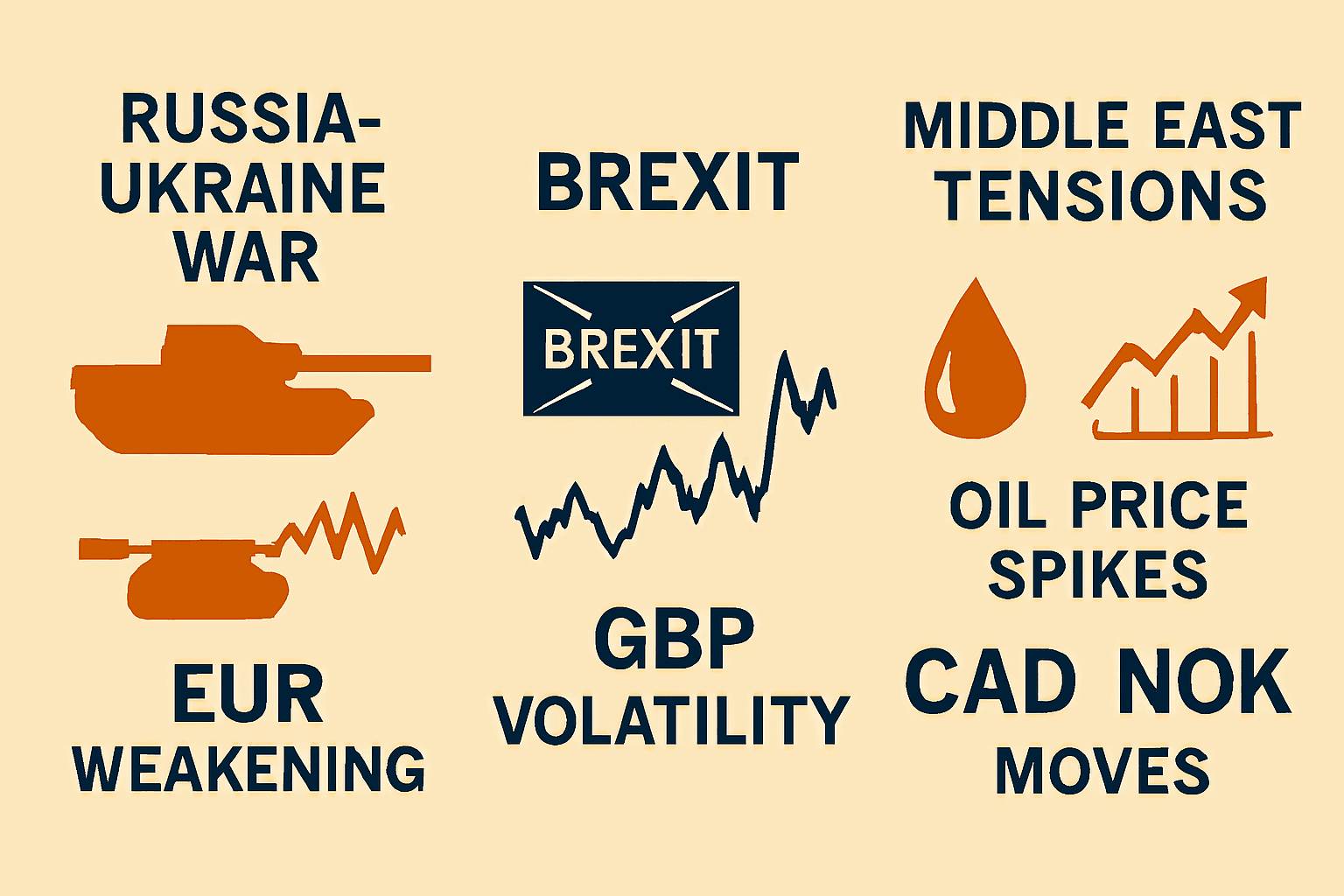
Russia-Ukraine War (2022):
- EUR dropped heavily due to proximity and energy dependence
- USD and CHF surged on safe-haven demand
- Oil prices spiked → CAD and NOK reacted positively
- Gold rallied as a hedge against uncertainty
Brexit (2016–2020):
- GBP became highly volatile during every negotiation round
- EUR suffered due to economic interconnection
- Traders began treating GBP as a short-term risk proxy
Middle East Tensions:
- USD/JPY often reacts quickly to escalation
- Crude oil spikes → CAD, RUB, and NOK see strong directional moves
- Risk currencies like AUD/NZD weaken on war risk
🎯 How to Position During Geopolitical Risk
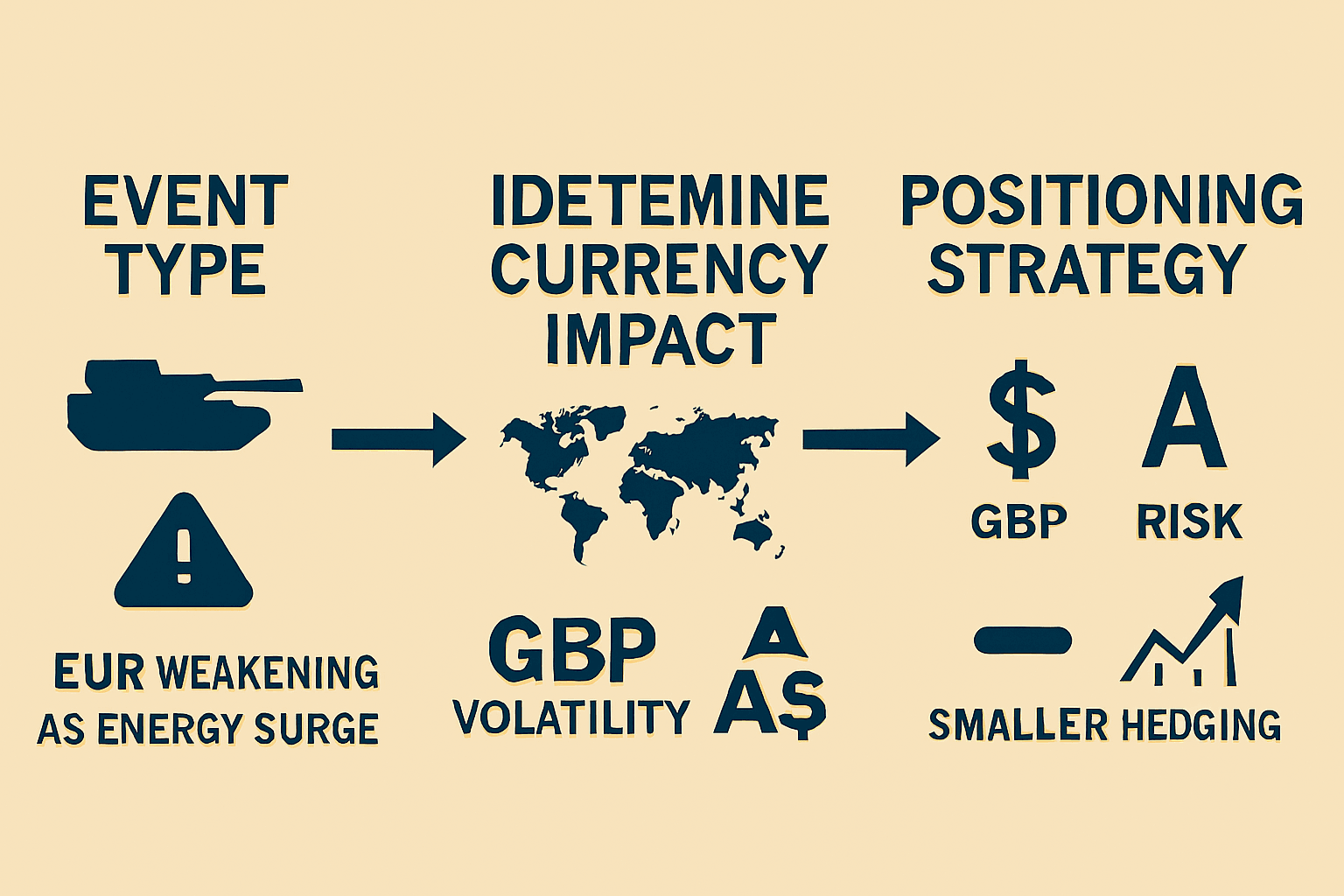
- Identify the shock’s core region.
Is the event regional (e.g., Taiwan tensions) or global (e.g., U.S.-China trade war)? - Evaluate who gains/loses.
- Exporters during a trade war?
- Oil-producing nations during energy shocks?
- Defense industry-related economies?
- Watch for safe-haven flows.
- When fear rises → long USD, CHF, or JPY
- When tensions cool → risk-on bounce in AUD, NZD, GBP
- Trade defensively.
- Smaller positions, wider stops
- Use hedging or stay flat during major geopolitical uncertainty
- Let the market digest the headline before jumping in
📉 Market Behaviors to Expect
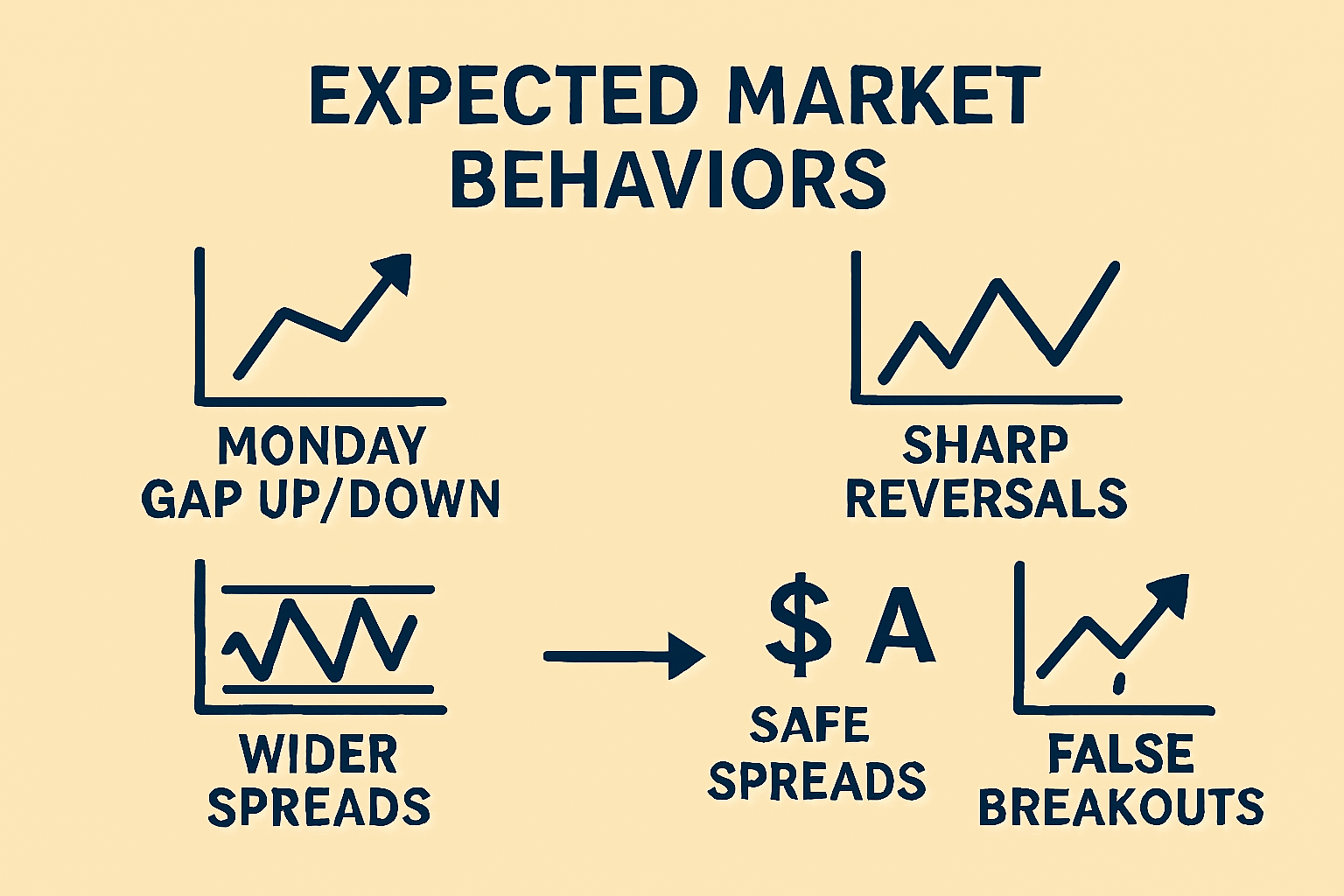
- Gap opens on Monday after weekend conflicts
- Sharp reversals from initial reaction (overreaction fades)
- Increased spreads and slippage be cautious during live events
- False breakouts during fear-based news surges
- Delayed follow-through if markets are waiting on policy response
⚠️ Mistakes to Avoid
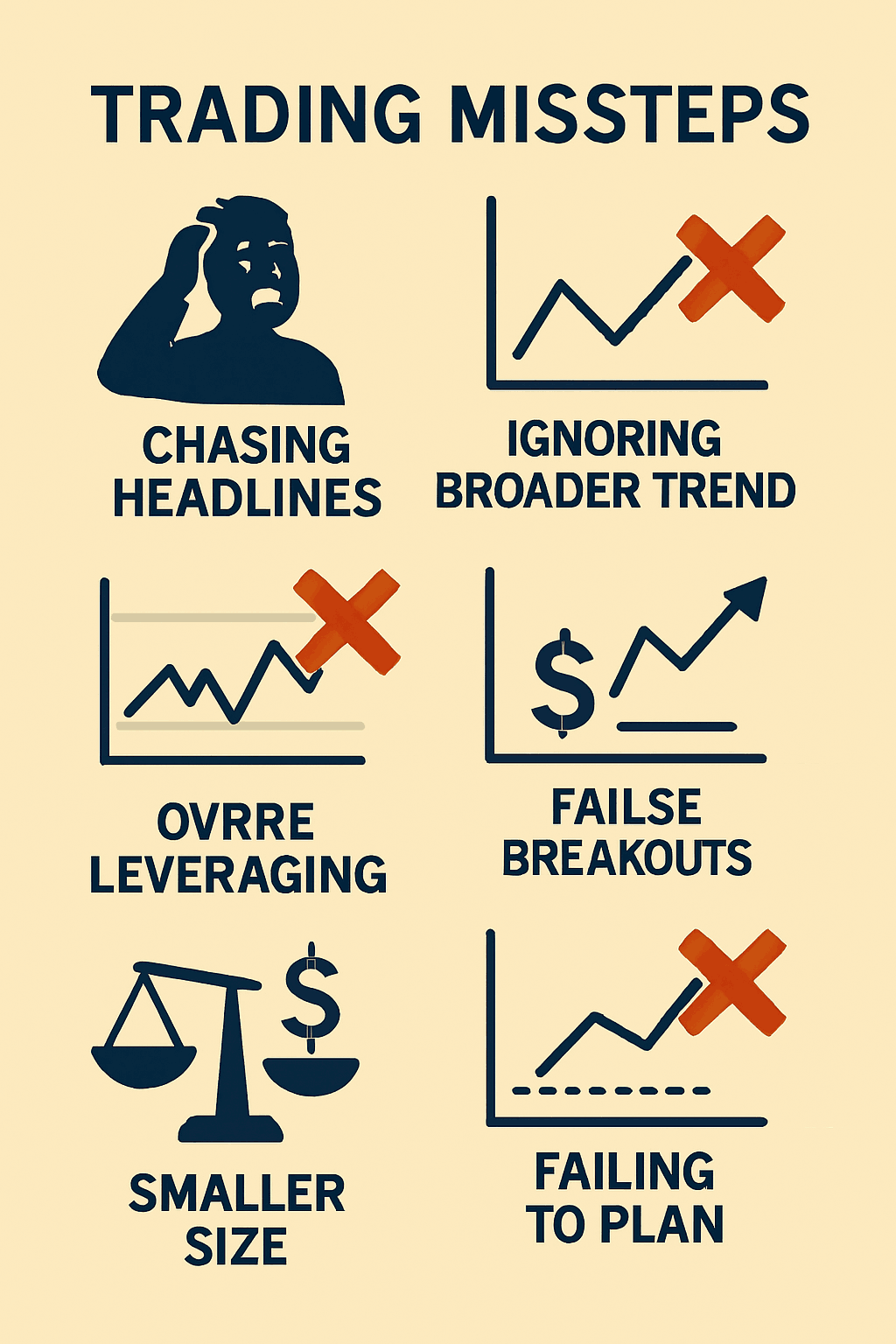
- Trading purely on emotion or headlines
- Ignoring the economic ripple effects of a political event
- Forgetting that geopolitical risk can linger for weeks or months
- Going heavy on positions during war/conflict uncertainty
- Ignoring the bigger trend a war spike doesn’t erase monetary policy trends
🧠 Final Thoughts
Geopolitical events are unpredictable but their effects on forex aren’t. They cause knee-jerk reactions, flight to safety, and major shifts in global money flow.
You can’t predict every event, but you can prepare:
- Know which currencies are sensitive.
- Watch where money flows during stress.
- Learn to react with logic, not fear.
That’s how pros trade headlines not with hope, but with structure.