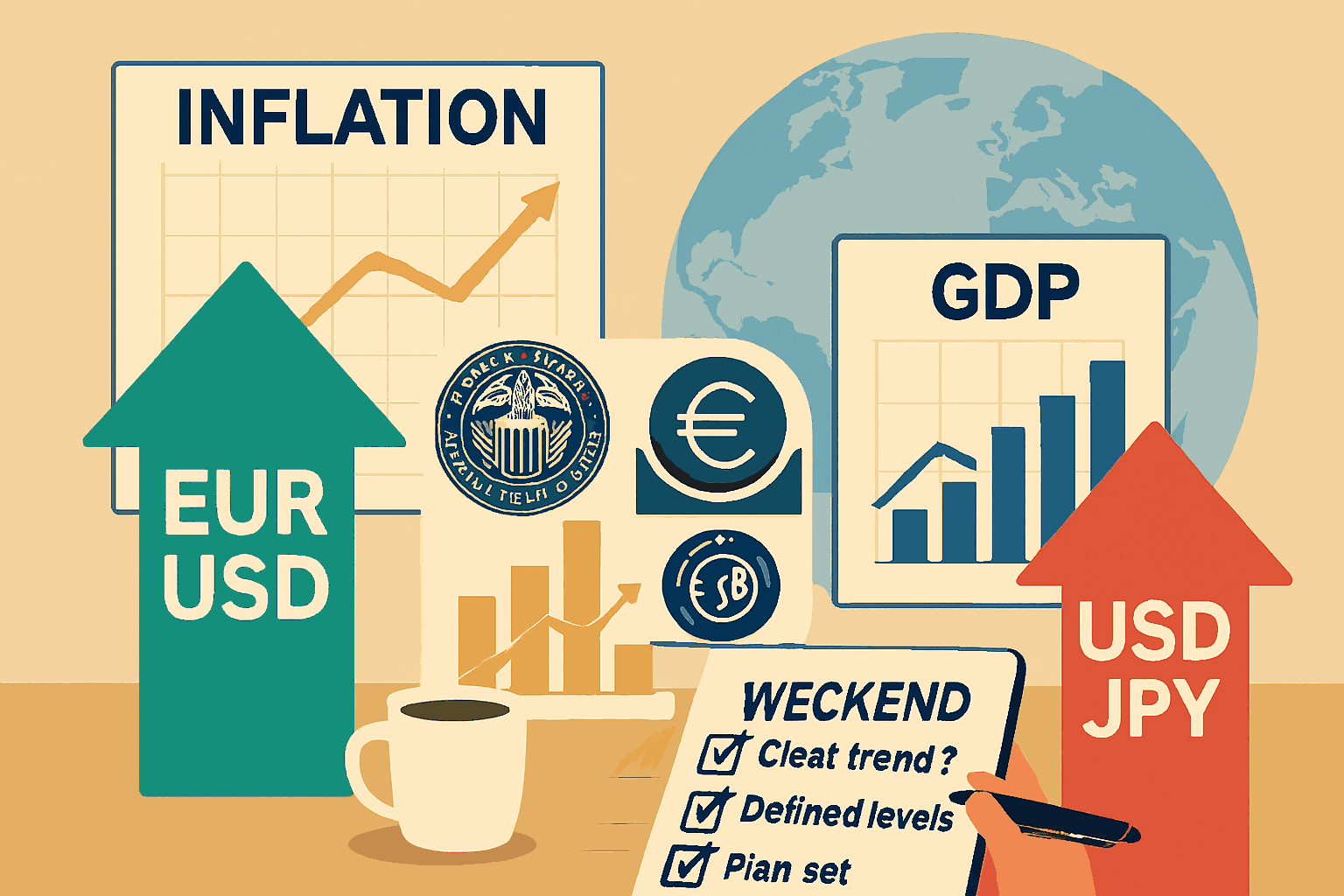
🧠 Introduction: The Macro Moves That Actually Matter
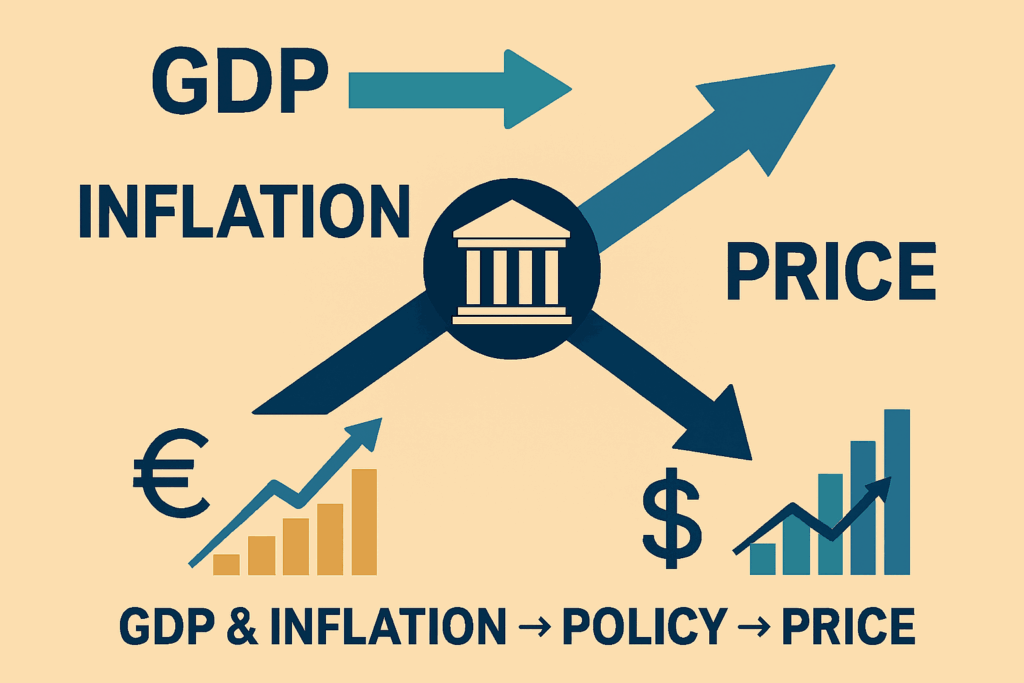
If interest rates are the “reaction,” tracking inflation and GDP gives you the “reasons.”
Every forex move you see from sudden USD strength to a weak EUR slide can often be traced back to macroeconomic fundamentals. Among the most critical: Inflation and Gross Domestic Product (GDP).
Smart traders focus on tracking inflation and GDP closely to anticipate central bank actions, forecast currency demand, and position themselves ahead of the crowd.
This guide will show you how to read, interpret, and apply inflation and GDP data to your forex trading like a true macro-aware trader.
🔍 Why Inflation and GDP Matter in Forex
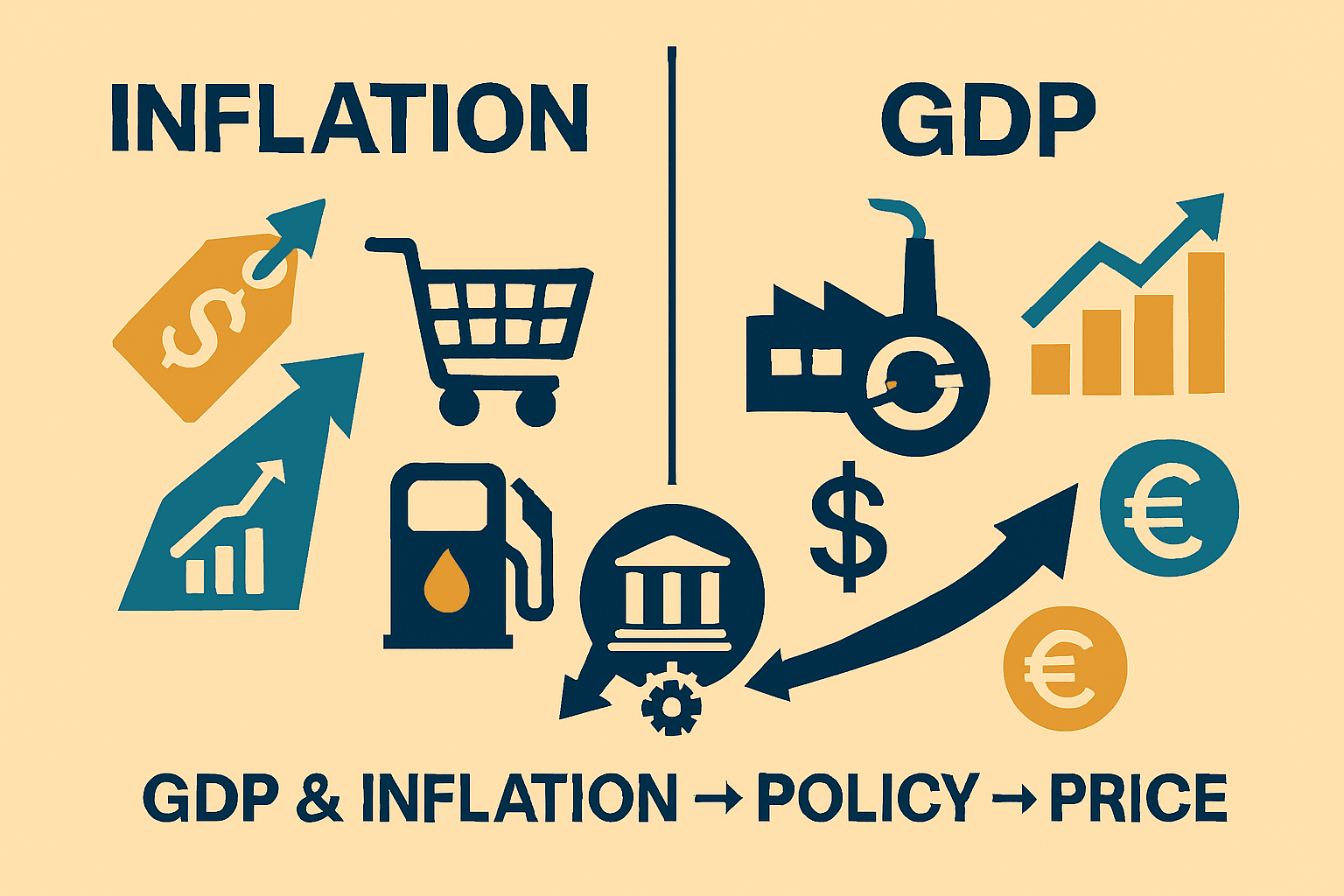
These two metrics define a nation’s economic health:
- Inflation reflects the rate at which prices rise. Too high = currency risk. Too low = economic stagnation.
- GDP measures total economic output. Rising GDP = growth. Shrinking GDP = contraction.
Central banks use these indicators to decide whether to raise, cut, or hold interest rates which, in turn, affects currency strength.
In short:
💡 GDP and inflation drive policy.
Policy drives price.
You drive profits if you’re ahead of the curve.
📊 Understanding Inflation: CPI and Beyond
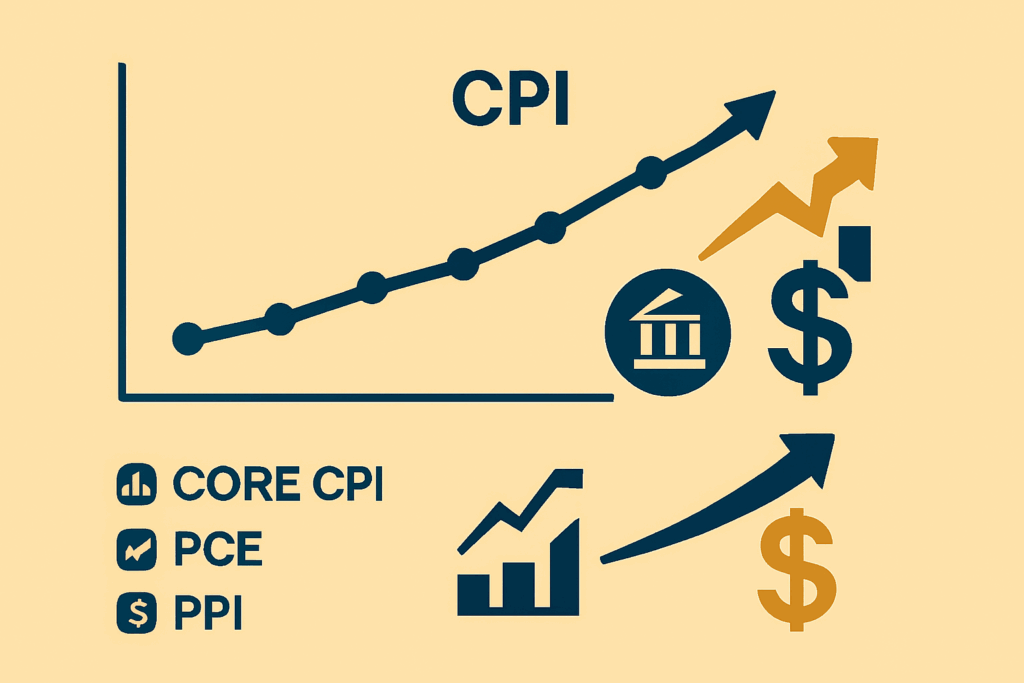
The most commonly tracked inflation indicator is the Consumer Price Index (CPI). It shows how the cost of a typical basket of goods changes over time.
Key insights:
- Rising CPI = inflation pressure = potential rate hikes = currency bullish
- Falling CPI = deflation risk = potential rate cuts = currency bearish
Other important inflation measures:
- Core CPI (excludes volatile food/energy)
- PCE (used by the Fed)
- Producer Price Index (PPI) – a leading inflation indicator
💥 Hotter-than-expected inflation numbers often cause immediate forex spikes.
💼 Understanding GDP: The Bigger Picture
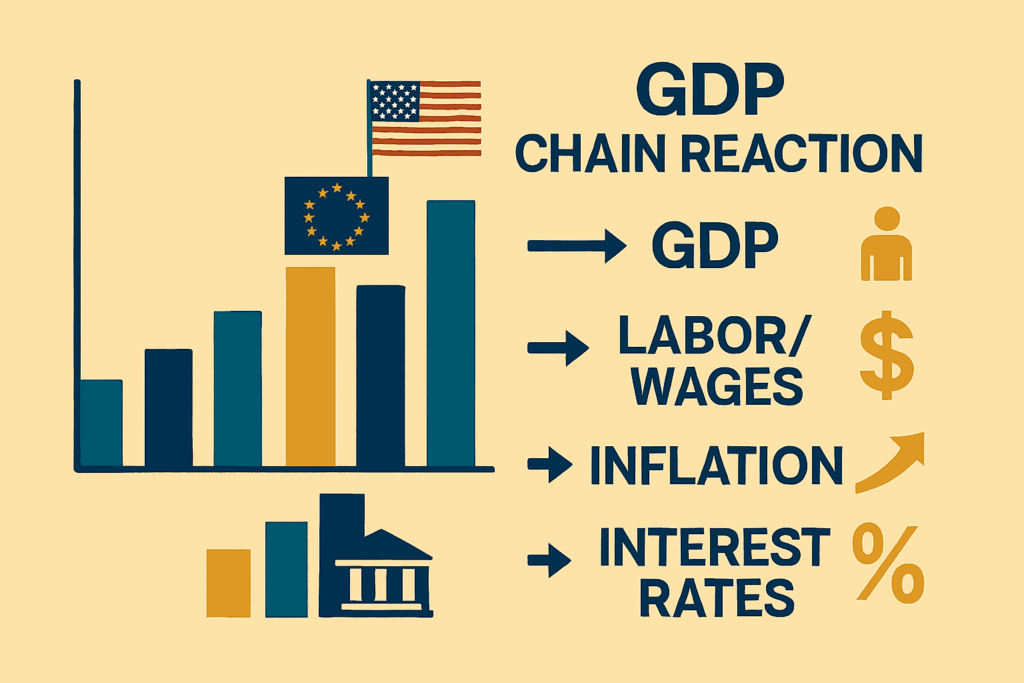
Gross Domestic Product (GDP) tracks a country’s total production and economic output. It’s released quarterly and often revised.
- Strong GDP growth = economic confidence = bullish for currency
- Weak or negative GDP = recession fears = bearish for currency
Watch for:
- Quarter-over-quarter changes
- Year-over-year comparisons
- Revisions to past data (often overlooked but highly impactful)
A growing economy often leads to tight labor markets, rising wages, and eventually higher inflation, prompting rate hikes.
📘 Real-World Application: EUR/USD and Inflation Divergence
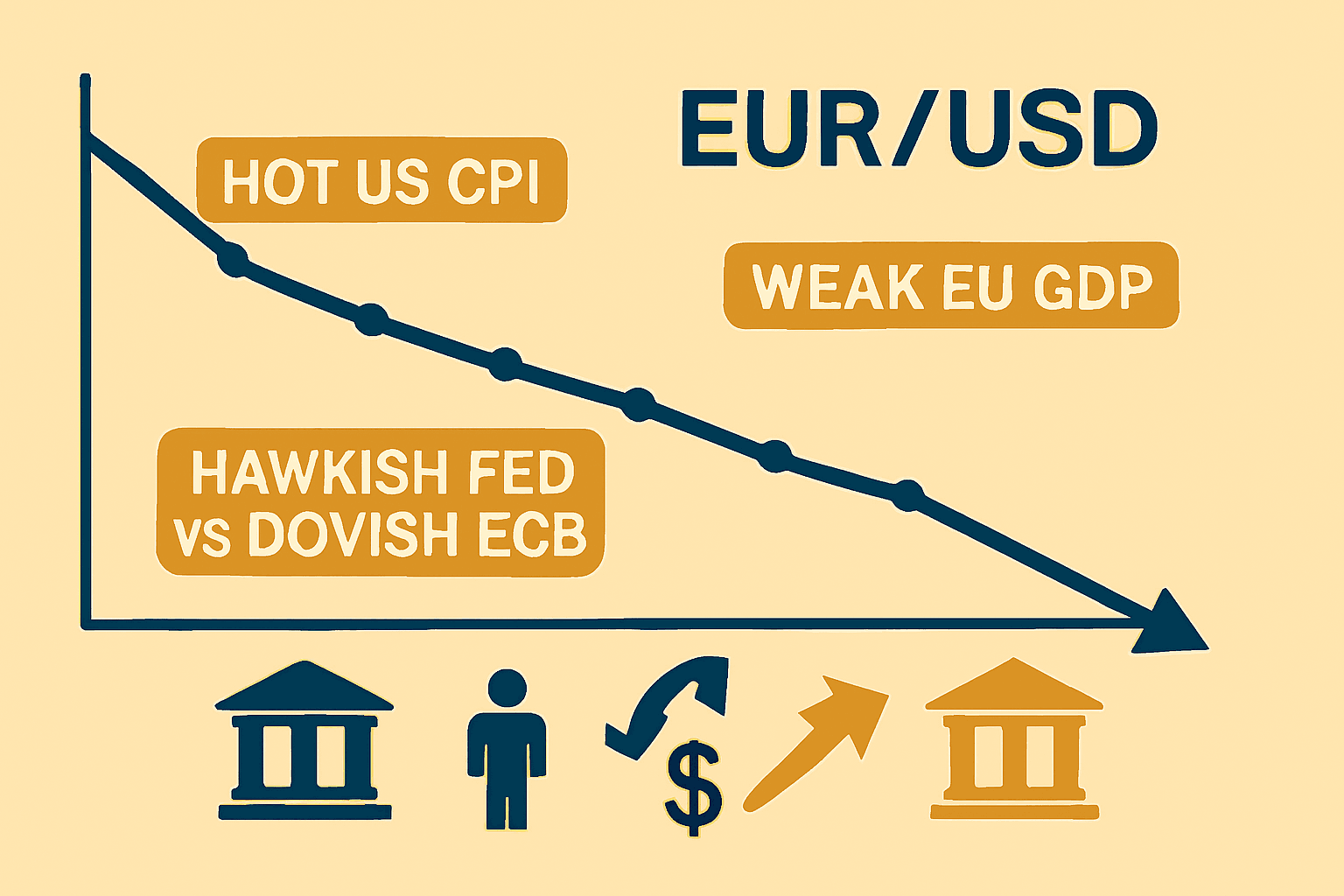
Suppose:
- U.S. inflation (CPI) is running hot
- Eurozone inflation is cooling down
- U.S. GDP is outperforming the EU
What happens?
- The Fed likely stays hawkish
- The ECB might pause or cut
- Result: EUR/USD drops due to divergent economic trajectories
That’s macro positioning in action based not on lagging indicators, but on economic momentum.
📅 Where to Track Inflation & GDP Data
- Forex Factory
- Investing.com
- Trading Economics
- Official central bank sites (e.g., fed.gov, ecb.europa.eu)
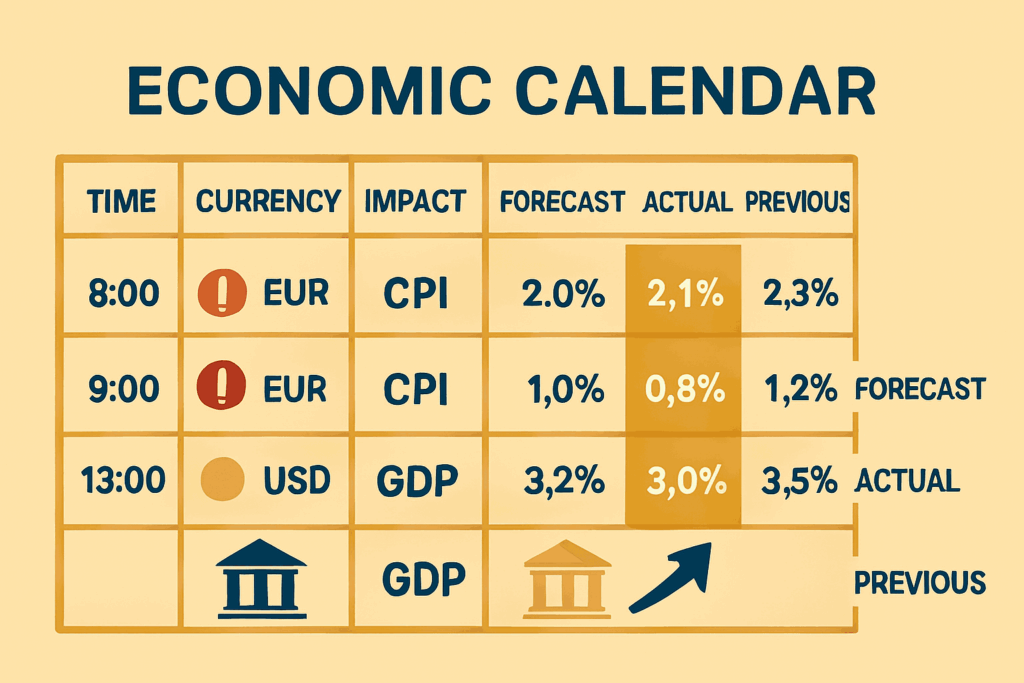
- Use economic calendars and filter by “high-impact” releases
Track:
- Release dates
- Forecast vs. actual numbers
- Prior revisions
Then compare how the market reacts often more important than the number itself.
🧠 Pro Tips for Smart Positioning
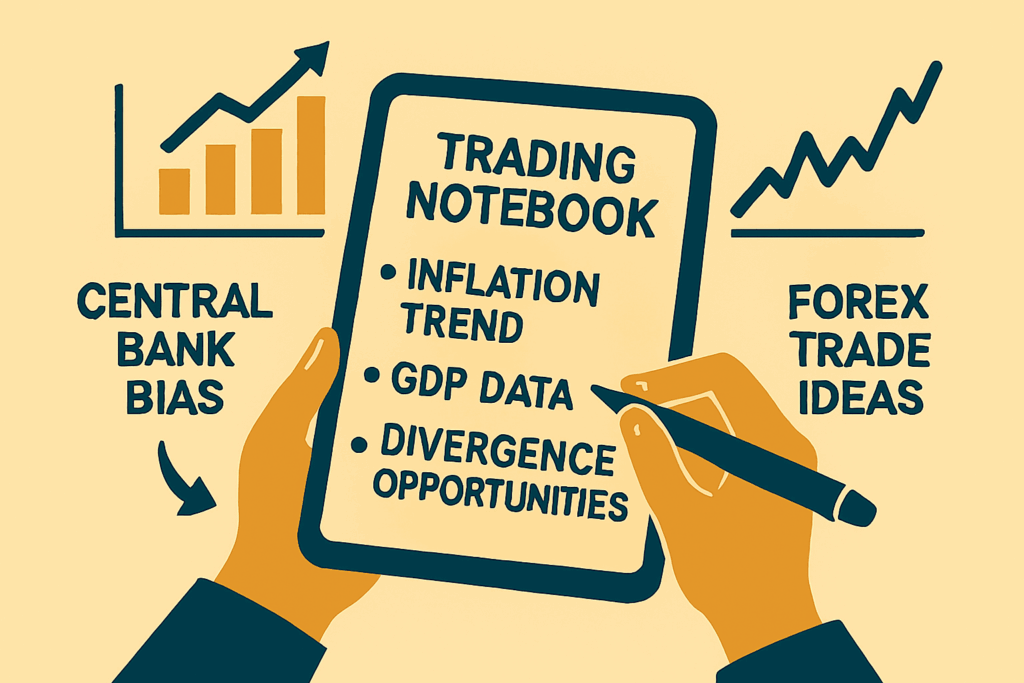
- Combine inflation + GDP trends to anticipate central bank tone
- Look for divergence between countries (e.g., strong US data vs. weak UK data = long USD/short GBP)
- Don’t trade the news blindly look at how price behaves before and after
- Use higher timeframes to map macro-driven directional bias, and lower timeframes for execution
⚠️ Mistakes to Avoid
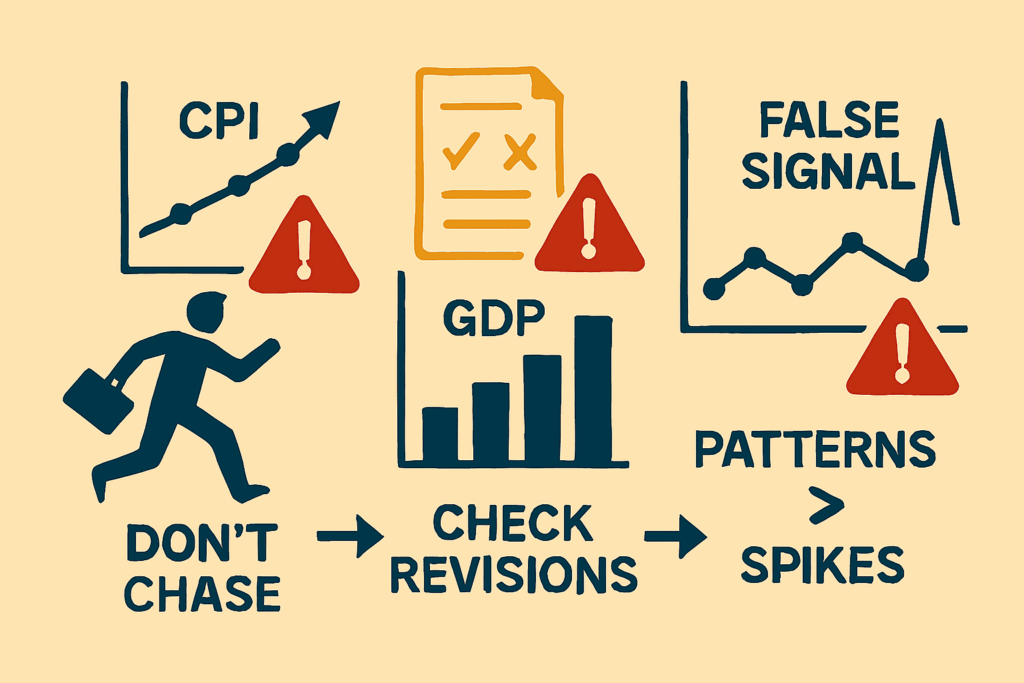
- Chasing price on release candles without confirmation
- Ignoring revisions to previous data
- Assuming one data point is enough look for patterns and trends
- Trading inflation/GDP without context (e.g., war, political instability, or surprise rate decisions)
🧭 Final Thoughts
Smart traders don’t just react they forecast.
By keeping a pulse on inflation and GDP, you can anticipate policy shifts, spot trend changes early, and confidently take positions based on real economic drivers not just technical setups.