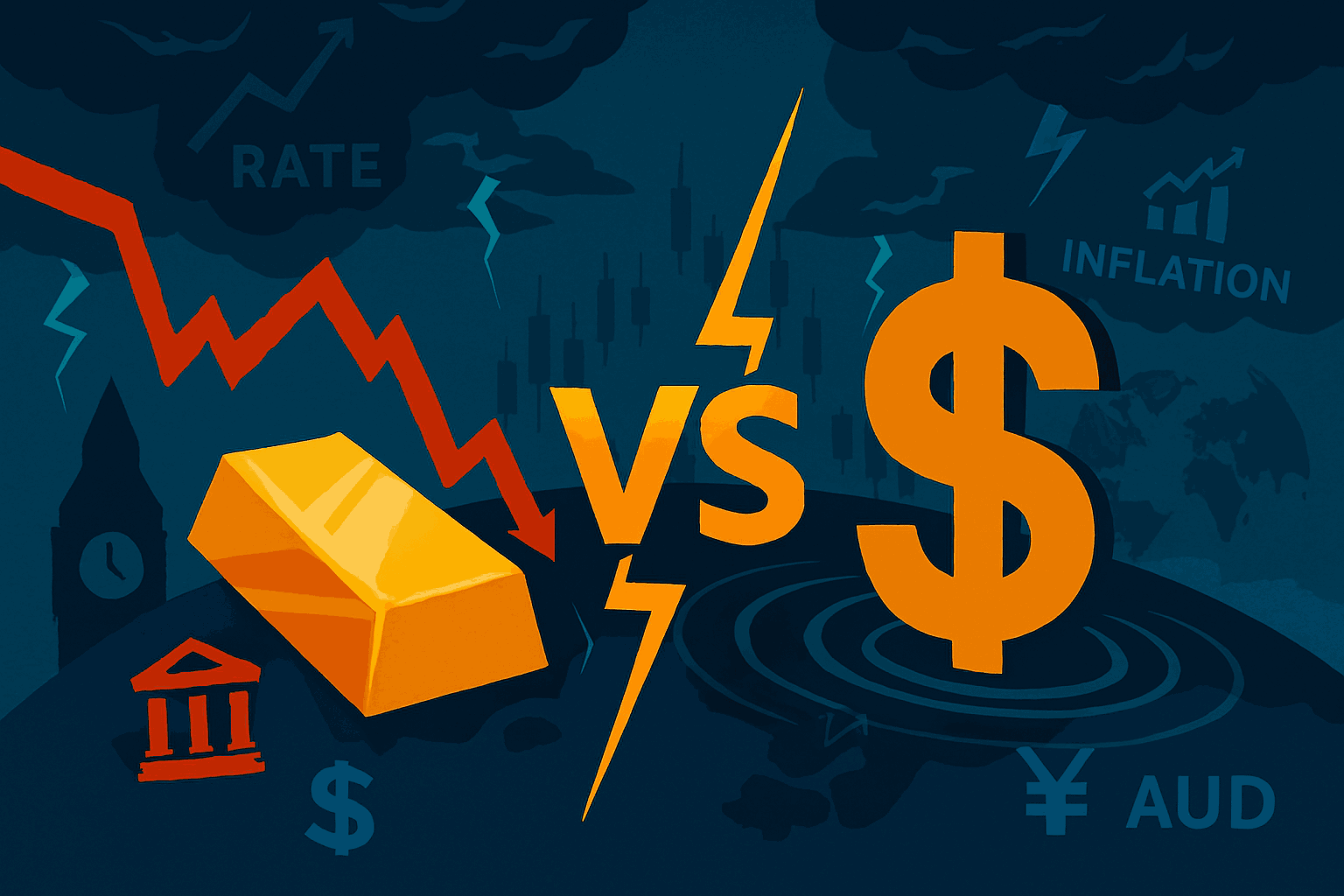
🧠 Introduction: Two Titans, One Tug-of-War
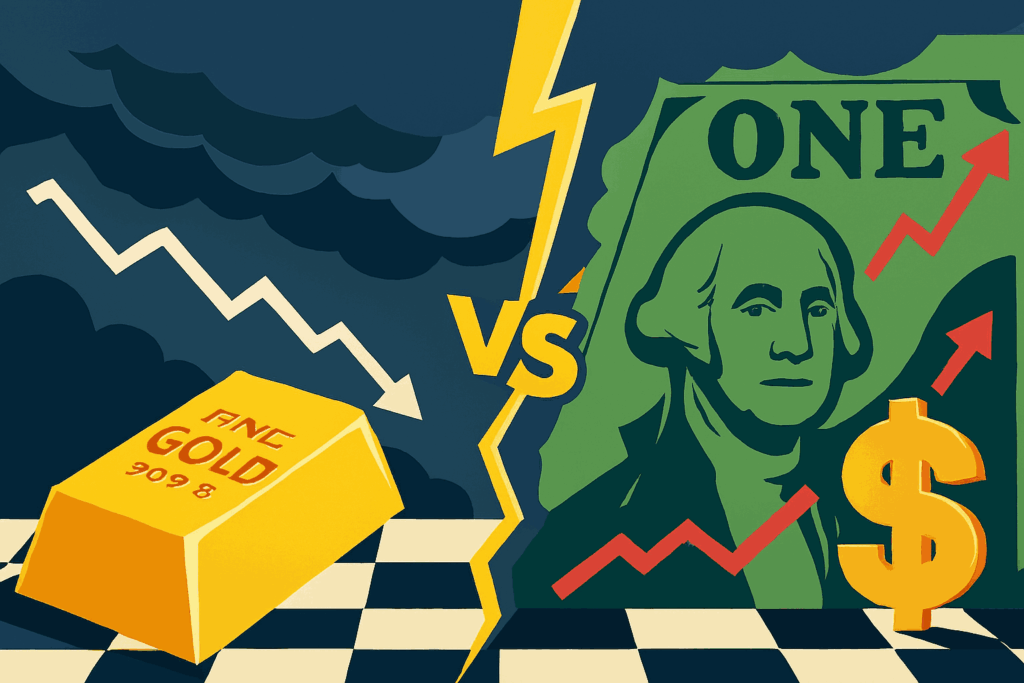
When traders get nervous, they look for safety. And in that search, two assets dominate the conversation: Gold and the U.S. Dollar the key players in the Gold vs USD battle.
Both are considered safe havens, but they don’t always move together. In fact, they often move opposite to each other especially during times of macro uncertainty, rising interest rates, or global risk events. This inverse behavior is at the heart of the ongoing Gold vs USD dynamic.
Right now, the market is facing a mix of sticky inflation, shifting Fed expectations, geopolitical flare-ups, and fading global growth. That creates a complex environment where both gold and USD have valid reasons to rally but also to reverse. Understanding this tug-of-war is crucial for anyone analyzing the Gold vs USD relationship.
This article breaks down what’s happening in this evolving Gold vs USD landscape, and what traders should watch to anticipate the next major move.
💰 The Inverse Relationship But Not Always
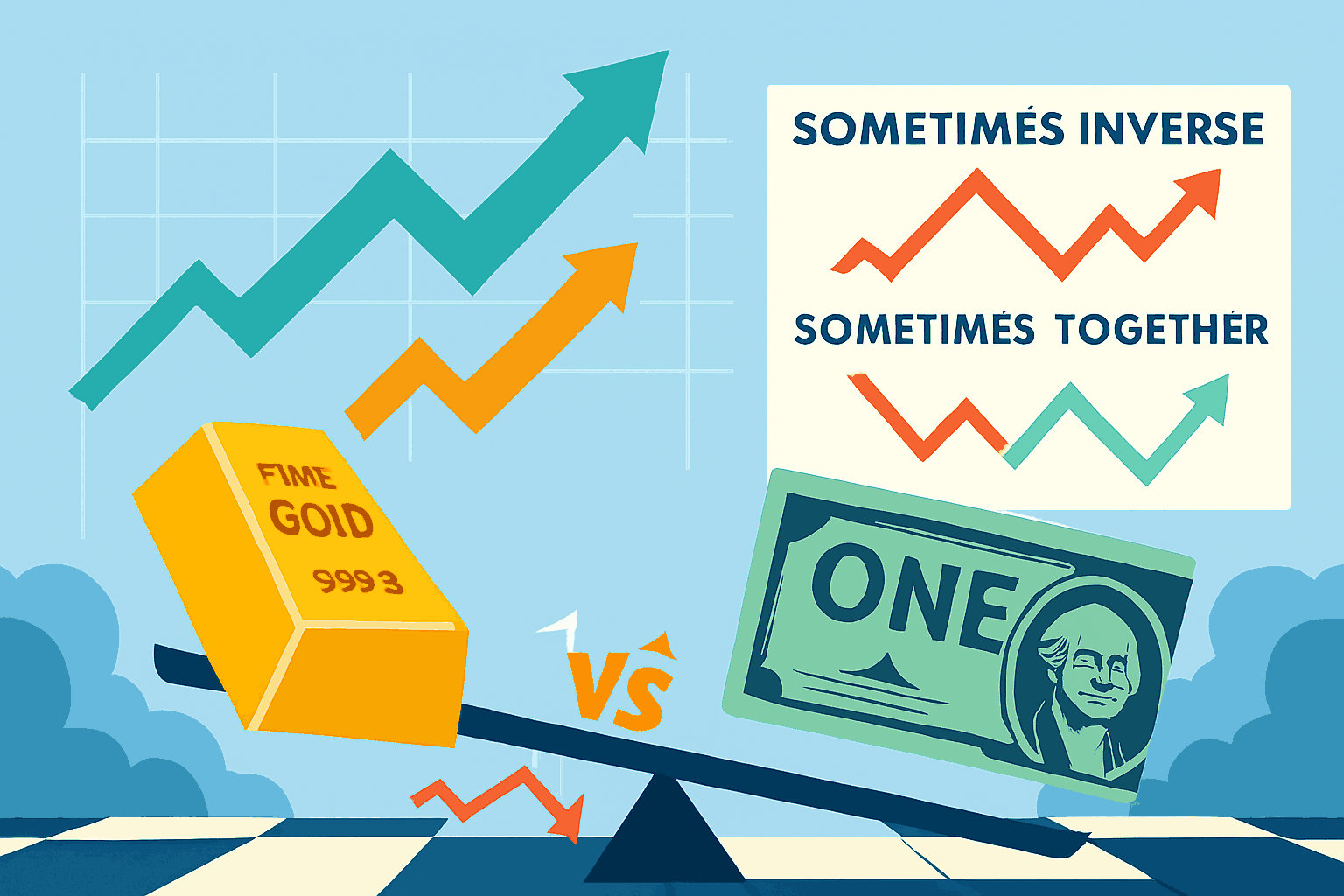
Traditionally, gold and the dollar have an inverse relationship. When the USD rises, gold usually falls because gold is priced in dollars and a stronger dollar makes it more expensive for non-USD buyers.
But it’s not always that simple.
There are moments when both assets rise together. For example, during high-stress global events, capital may flow into both USD and gold as a hedge against uncertainty. Likewise, during major inflation scares, gold can rally even if the dollar is strong because investors are seeking to preserve value.
So while the inverse pattern is common, it’s not a law. The “why” behind the move matters more than the move itself.
🏦 What’s Driving Gold Right Now?

Several bullish factors are keeping gold elevated:
- Central banks continue to buy gold heavily, especially in China and BRICS nations.
- Persistent geopolitical instability (Middle East, Eastern Europe) is driving safe-haven demand.
- Despite high interest rates, real yields (adjusted for inflation) are not surging giving gold room to run.
- Fear of de-dollarization and long-term inflation keeps physical gold attractive.
However, there are also headwinds:
- Stronger-than-expected U.S. economic data could boost Treasury yields, putting pressure on gold.
- If inflation starts cooling again and the Fed becomes more dovish, gold might correct.
In short: gold is holding up well, but momentum is fragile and sensitive to both data and news headlines.
💵 What’s Moving the U.S. Dollar?
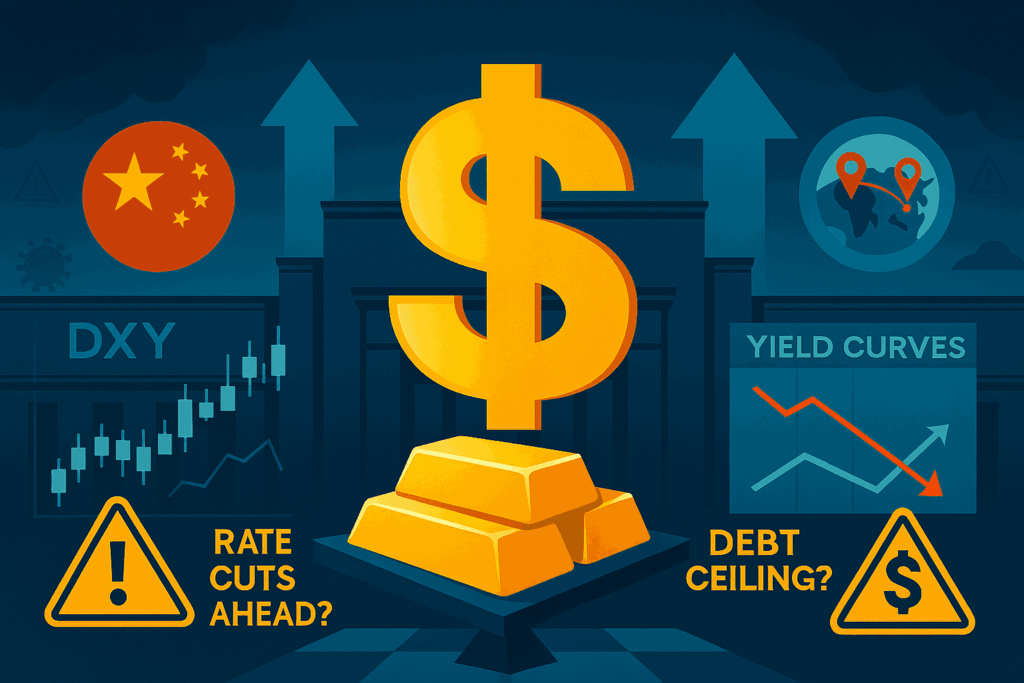
The dollar’s strength hinges primarily on one thing: interest rate expectations.
With the Fed maintaining a “higher for longer” stance and U.S. data staying resilient, USD demand remains solid especially against currencies like the euro and yen. Rising yields and risk-off sentiment also drive capital into the dollar.
But cracks are forming. If future data shows weakening growth or inflation finally breaking lower, the market will start pricing in rate cuts. That would likely trigger a pullback in the USD and open the door for a fresh gold rally.
Another factor to consider: global liquidity and bond market volatility. When markets panic especially with concerns around U.S. debt, shutdowns, or political instability the dollar initially surges, but longer term, it may weaken as global confidence shifts.
🧭 What Traders Should Watch
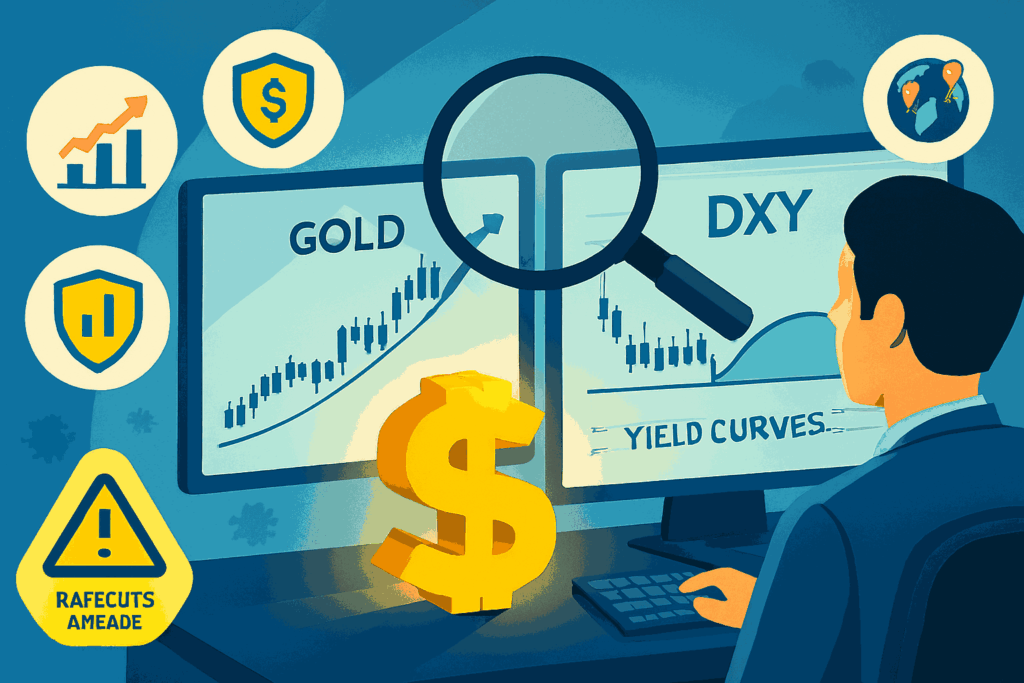
First, keep a close eye on real yields (nominal yields minus inflation). Rising real yields hurt gold more than nominal ones. If real yields start to drop, it’s gold-friendly even if Fed rates remain unchanged.
Second, track Fed tone and data releases. A hotter-than-expected CPI or a strong jobs report gives the dollar a fresh boost. But soft data could trigger gold breakouts above resistance levels.
Third, monitor technical structure. Gold has been forming a series of higher lows, while DXY (Dollar Index) is trying to hold support. If gold breaks cleanly above recent highs while the dollar loses momentum, expect the decoupling to continue.
Finally, watch geopolitical headlines. Escalations in conflict zones, unexpected sanctions, or financial crises in emerging markets can push both assets up but gold tends to benefit more during fear-based moves.
🧠 Final Thoughts
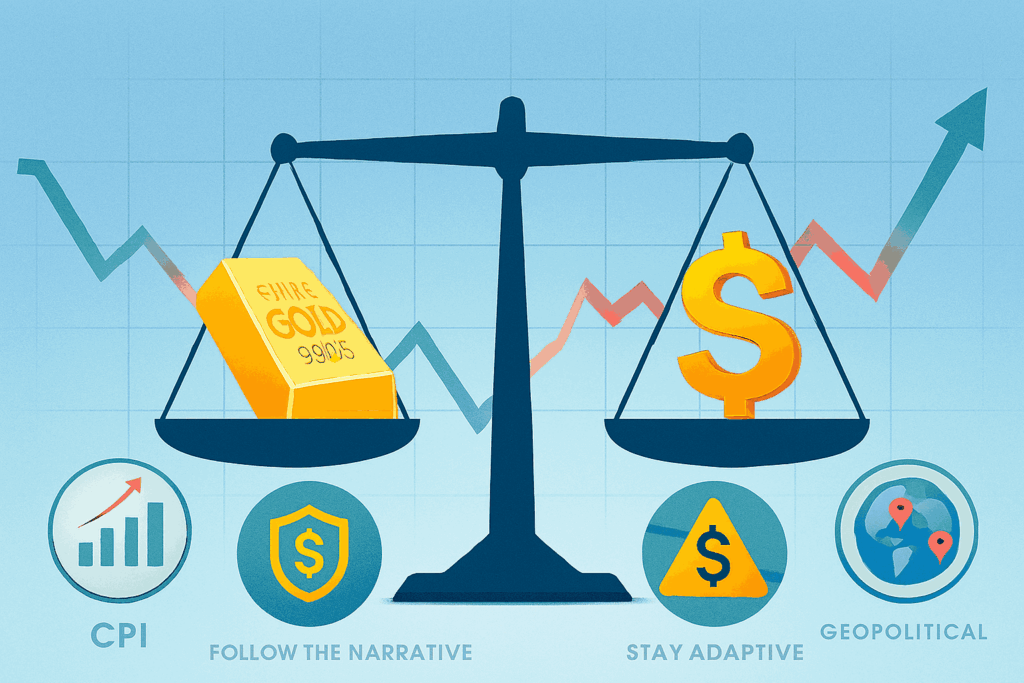
The battle between gold and the dollar isn’t about which asset is better, it’s about which narrative dominates the market.
If interest rates and yield expectations drive sentiment, the dollar holds the upper hand.
But if fear, inflation anxiety, or global instability take center stage, gold becomes the king of safety once again.
The savvy trader isn’t loyal to either side, they’re watching the data, tracking the narrative, and ready to pivot when the balance of power shifts.