
🧠 Introduction: Fed Speaks, the Market Listens
The latest FOMC decision is in, and the U.S. dollar has reacted. But is the post-Fed move just a short-term bounce… or the start of something bigger for the USD Strength Outlook?
Every time the Federal Reserve updates its stance whether by adjusting rates or changing its tone it creates ripple effects across global currency markets. But to trade the USD with real conviction, you need to separate short-term volatility from long-term directional trends.
This forecast breaks down the USD Strength Outlook across both timeframes, helping you trade with clarity, not confusion.
🏦 FOMC Recap: What Just Happened?
In the most recent meeting, the Fed:
- Held rates steady, but maintained its “higher for longer” stance
- Highlighted persistent inflation risks, especially in services
- Projected fewer rate cuts than markets expected in the next 12 months
- Acknowledged a resilient labor market
The Fed didn’t surprise the markets, but it reinforced a hawkish bias, signaling that monetary easing isn’t happening anytime soon.
⚡ Short-Term USD Outlook (Next 1–2 Weeks)
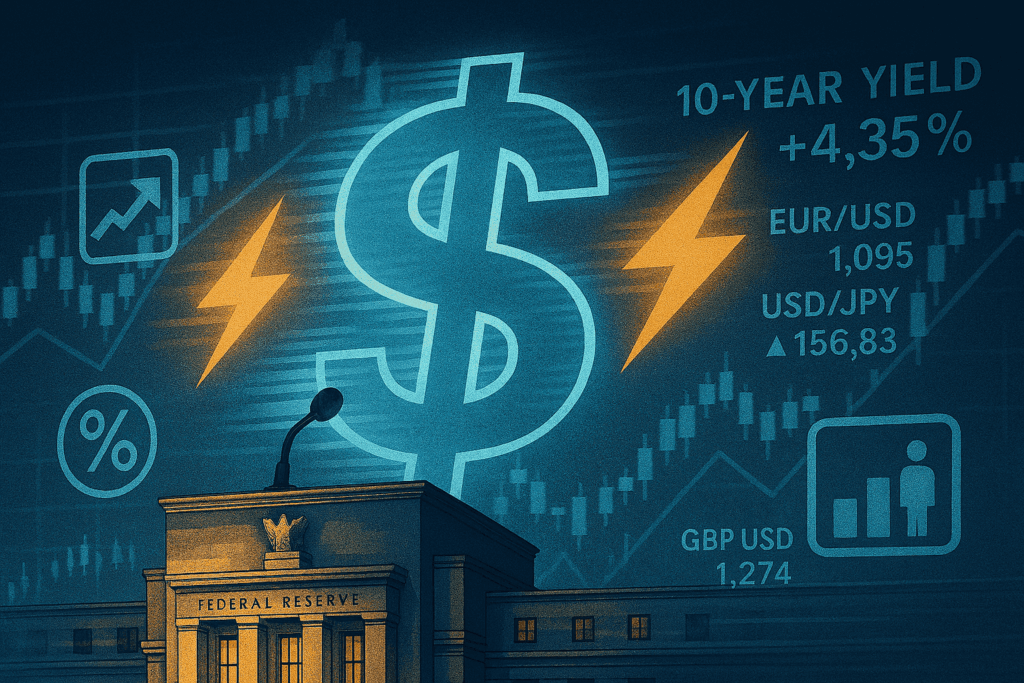
Bullish Factors:
- Hawkish Fed tone supports short-term USD demand
- Risk-off sentiment globally (due to geopolitical tensions or weak global growth) benefits safe-haven flows
- Rising Treasury yields attract capital inflows into the dollar
- Strong U.S. data (jobs, CPI) keeps expectations for easing in check
Bearish Risks:
- Profit-taking after the initial post-FOMC spike
- Weak U.S. data surprises (especially NFP, ISM)
- Technical overbought signals on DXY (Dollar Index)
Short-Term Playbook:
- Buy USD dips against weaker currencies (EUR, GBP, JPY)
- Watch for resistance zones near recent USD highs
- Monitor yield spreads if U.S. yields hold firm, the dollar likely follows
🧭 Long-Term USD Outlook (Next 3–6 Months)

Bullish Arguments:
- Inflation is proving sticky, reducing chances of aggressive rate cuts
- The Fed may remain tighter than ECB, BoE, or BoJ → wider rate differential
- Global uncertainty (e.g., China’s slowdown, war risks) could drive ongoing safe-haven demand
Bearish Arguments:
- If inflation slows and growth dips, the Fed may be forced to cut faster
- U.S. fiscal concerns and debt debates could weigh on investor confidence
- Long USD positions are already crowded → positioning risk
- Other central banks may catch up later in 2025 (e.g., BoE or ECB if inflation resurges)
Long-Term Bias:
- Neutral to Slightly Bullish, but heavily data-dependent
- Positioning should remain flexible especially heading into the U.S. election cycle, which historically increases dollar volatility
📊 DXY Technical Snapshot
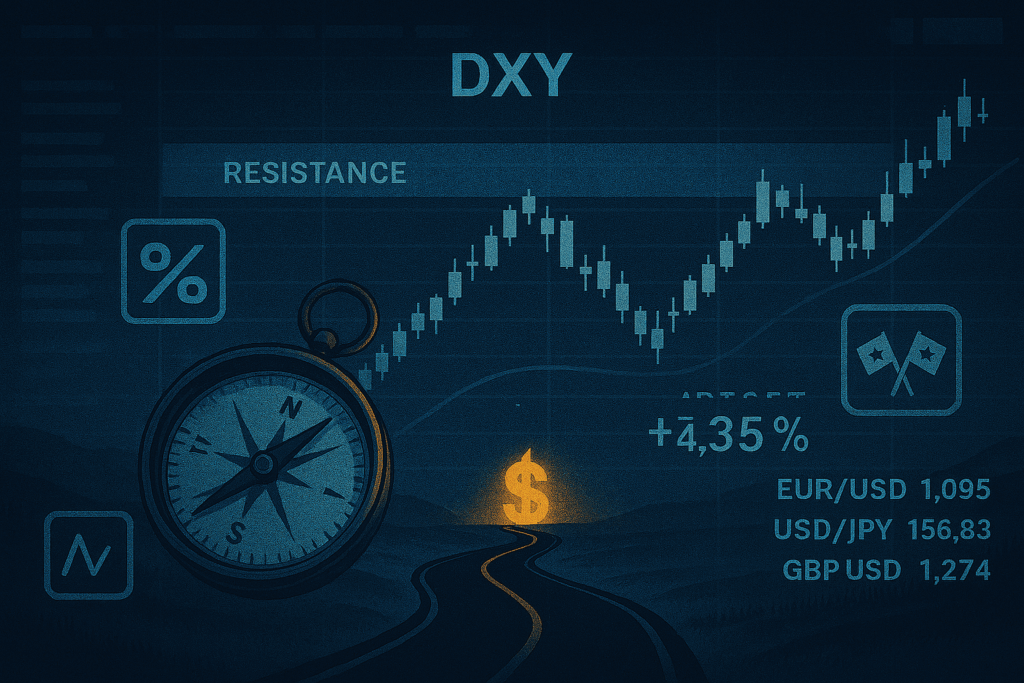
- Current Zone: (e.g., 105.80 adjust to current data)
- Key Resistance: 106.50 → Break confirms further upside
- Key Support: 104.20 → Break below here could flip short-term bias
- Trendline: Still intact from April low
- MACD & RSI: Suggest some near-term overbought, but not exhausted
🎯 Currency Pair Highlights

- USD/JPY: Bullish while above 157.00; watch for BoJ intervention headlines
- EUR/USD: Bias remains bearish below 1.0800; rallies likely to be sold
- GBP/USD: Vulnerable below 1.2700 with dovish BoE narrative
- AUD/USD: Weak on risk-off flows and soft China data
- Gold (XAU/USD): Inversely tied to USD strength watch if DXY stalls near highs
🔔 What to Watch Next

- U.S. NFP & CPI reports – critical for short-term direction
- Fed speakers & minutes – looking for tone shifts
- Global risk sentiment – any surge in uncertainty = USD boost
- Bond market moves – 10Y yield above 4.3% = bullish for USD
🧠 Final Thoughts

The dollar remains in the driver’s seat for now. The Fed’s stance gives it fuel in the short run, and global uncertainty is a tailwind. But longer-term, the outlook is more fragile and hinges entirely on inflation and growth trends.
As a trader, don’t get caught betting on one direction too soon. Instead, trade the dollar with a dual lens take advantage of short-term momentum, but stay aware of the shifting macro tide.